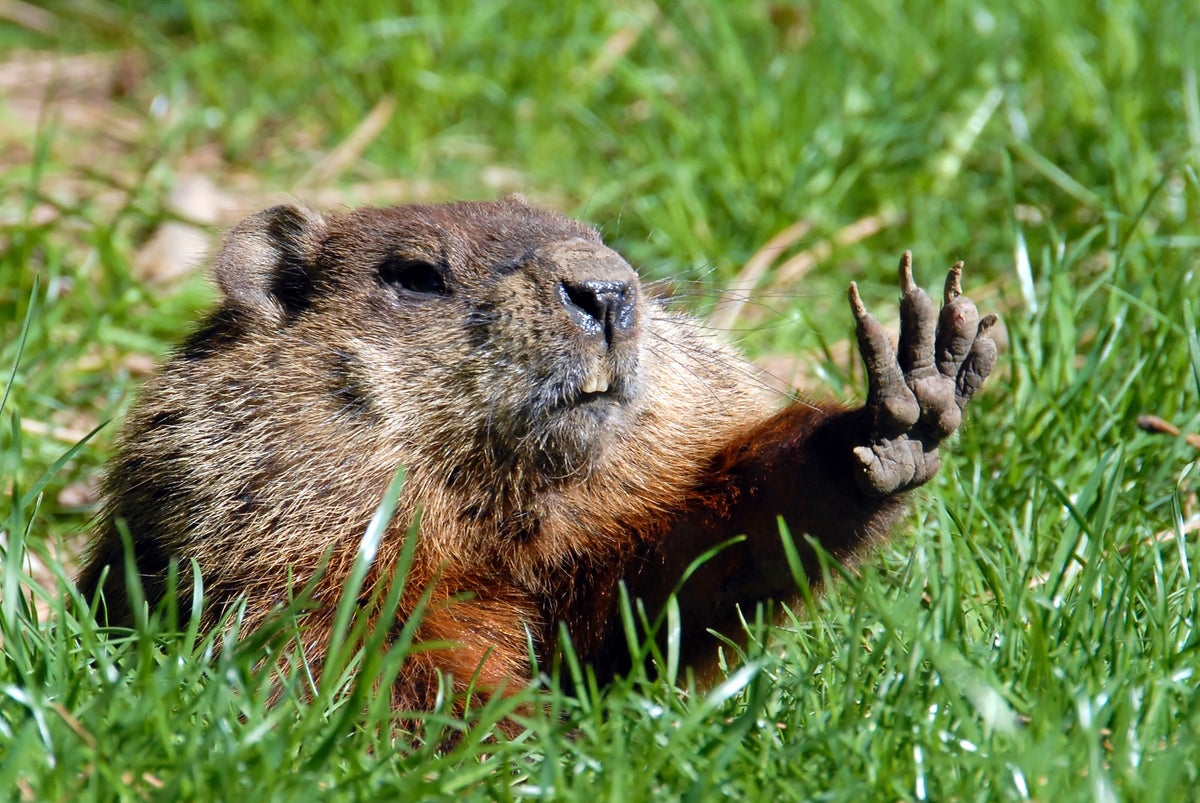
Punxsutawney Phil has emerged from his burrow on Groundhog Day since at least 1886, joined by other Marmota monax across the country. Folklore likely from Celtic mid-season festivals holds that seeing a shadow means six more weeks of winter; no shadow signals an early spring. Phil's forecasts perform no better than chance, yet thousands gather each February 2. Groundhogs emerging in late winter are often males seeking mates, marking territory, then returning to hibernation. Groundhog incisors grow continuously, requiring gnawing to manage length; these teeth serve for feeding, defense, and nest-building. Burrows can be elaborate with distinct chambers.
"Since at least 1886, a groundhog now named Punxsutawney Phil has emerged from his burrow every Groundhog Day to predict when winter weather will end. Other groundhogs (Marmota monax) around the country have joined him in this climatological soothsaying. Folklore, likely stemming from Celtic mid-season festivals, dictates that if Phil sees his shadow, winter will continue for six more weeks, whereas if he doesn't, spring will come early. (Many people around the country are probably hoping that shadow doesn't appear after recent winter weather.)"
"Of course, Phil's forecasts are actually no better than chance, but thousands, drawn by the allure of an unusual event for an unusual creature, still gather to see him emerge every February 2. To celebrate these odd critters, here are six of the weirdest facts about groundhogs, one for each week of winter we might have left."
"When groundhogs emerge this time of year, they are actually more interested in finding mates than making forecasts. The first ones to go aboveground are usually males that take a few days to mark their territory and gauge potential partners before they head back into their burrows for another month of hibernation. Towering Teeth Groundhogs' teeth never stop growing, so gnawing on things to keep them from getting too long is essential. The animals usually use their powerfully regenerative teeth to break off pieces of food, defend themselves and gather materials they might use to build their nests."
Read at www.scientificamerican.com
Unable to calculate read time
Collection
[
|
...
]