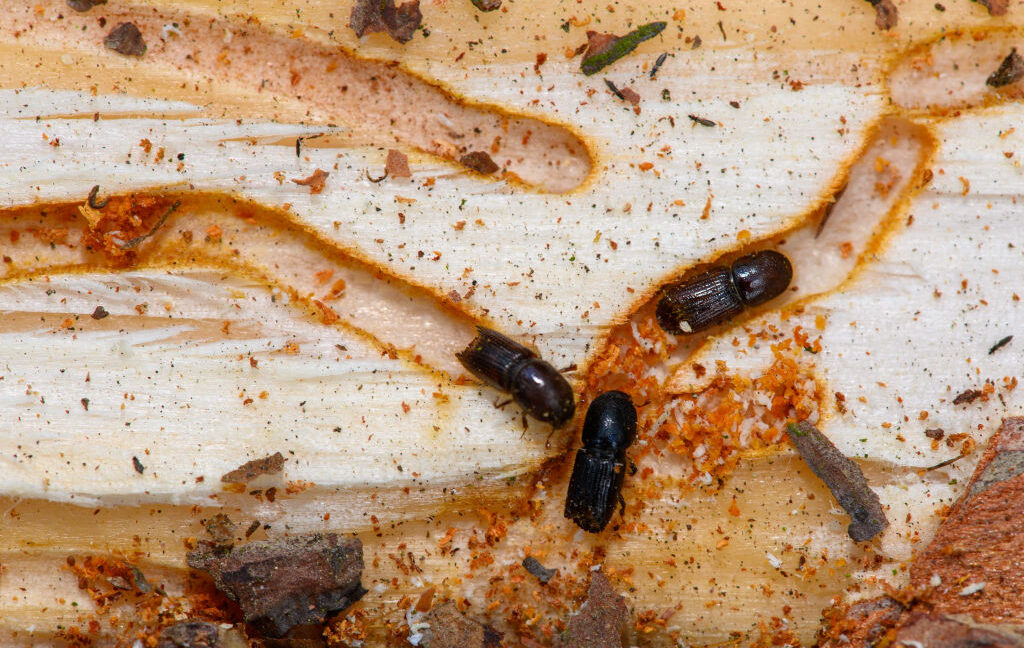
"Infestations of bark beetles are the bane of spruce trees. Eurasian spruce bark beetles (Ips typographus) ingest bark high in phenolic compounds, organic molecules that often act as antioxidants and antimicrobials. They protect spruce bark from pathogenic fungi-and the beetles take advantage. Their bodies boost the antimicrobial power of these compounds by turning them into substances that are even more toxic to fungi. This would seem to make the beetles invulnerable to fungi."
"First line of defense Populations of bark beetles have recently exploded in temperate forests because of climate change. One species they feed on is the Norway spruce (Picea abies), which makes organic phenolic compounds known as stilbenes and flavonoids. Stilbenes are hydrocarbons that function as secondary metabolites for plants, and flavonoids, which are polyphenols, are also secondary plant metabolites that are often antioxidants."
Spruce bark contains phenolic compounds—stilbenes and flavonoids—linked to sugars that provide antibacterial and antifungal protection. Eurasian spruce bark beetles ingest the bark and convert those phenolics into derivatives that enhance antimicrobial activity, protecting beetles from fungal pathogens. Populations of bark beetles have increased in temperate forests due to climate change, intensifying damage to Norway spruce. Certain strains of the entomopathogenic fungus Beauveria bassiana can circumvent the beetles' fortified chemical defenses, infecting and killing the pests. Use of these fungal strains offers a potential biological control alternative to noxious insecticides.
Read at Ars Technica
Unable to calculate read time
Collection
[
|
...
]