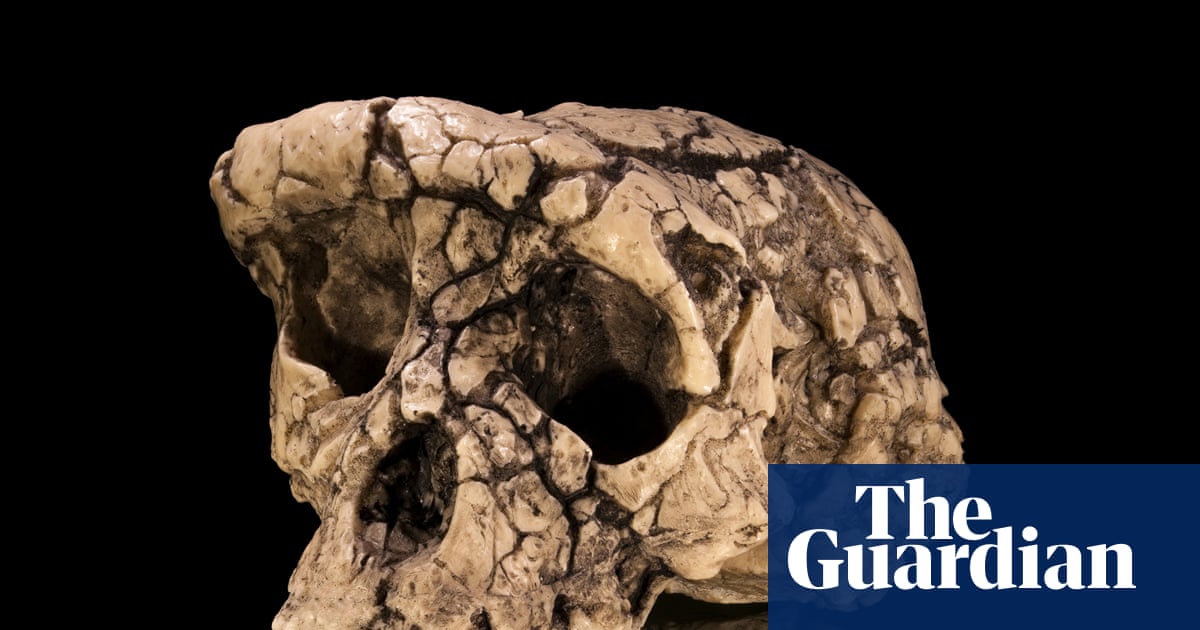
"In the murky first chapters of the human story is an unknown ancestor that made the profound transition from walking on all fours to standing up tall, an act that came to define us. The odds of stumbling on the fossilised evidence of such an evolutionary prize are slim, but in new research, scientists argue that an ape-like animal that lived in Africa 7m years ago is the best contender yet."
"Based on the features we've found, this would have looked like a bipedal ape, most similar to a chimpanzee or bonobo, said Dr Scott Williams, an associate professor at New York University and the lead author on the study. While chimps and bonobos can walk upright for short stretches, they are mostly knuckle-walkers. The work is the latest in a debate that has raged since 2001, when a handful of Sahelanthropus fossils were recovered from the Djurab desert in Chad."
Fossils attributed to Sahelanthropus tchadensis, dated to about 7 million years ago and recovered from the Djurab desert in Chad, combine ape-like cranial features with limb bones showing adaptations for upright walking. A re-examination of a partial thigh bone and forearm bones using newer techniques compared their size and proportions to other primates and suggested bipedal locomotion rather than habitual quadrupedalism. Sahelanthropus is considered the oldest known hominin since the split with chimpanzees. The specimen would have resembled a bipedal ape similar in overall form to chimpanzees or bonobos but moving primarily on two legs.
Read at www.theguardian.com
Unable to calculate read time
Collection
[
|
...
]