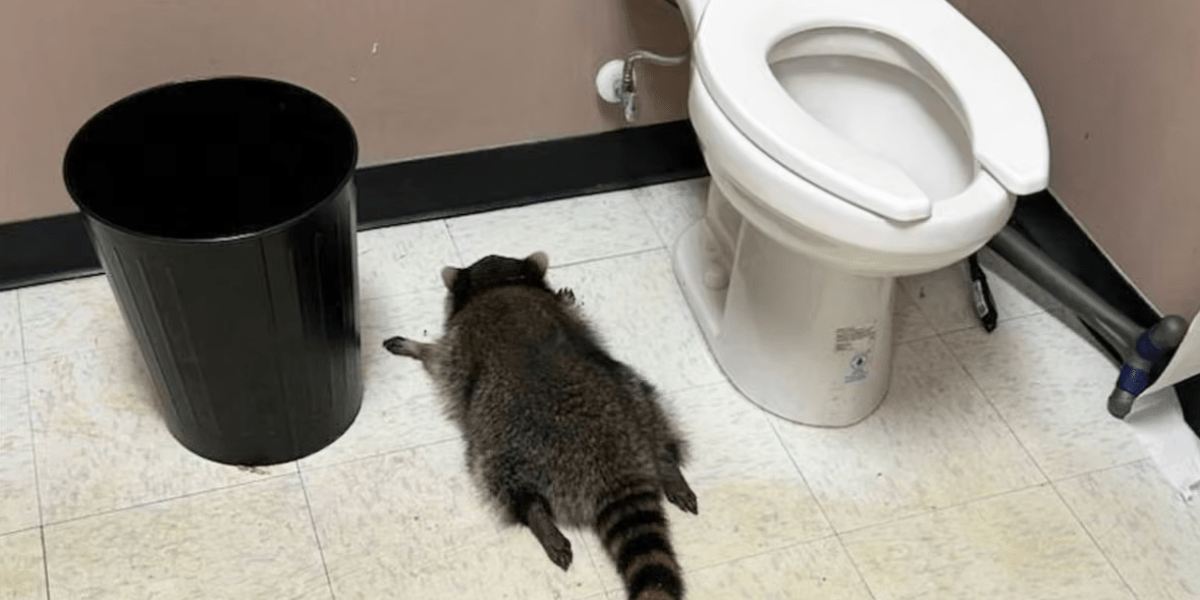
"When a curious raccoon broke into an Ashland, Virginia, liquor store in December 2025, sampled the stock and passed out on the bathroom floor, the story went viral within minutes. The local animal shelter's Facebook post was picked up by national and international outlets and quickly inspired raccoon-themed cocktails, "trashed panda" merchandise and even a cameo on "Saturday Night Live.""
"In the U.S., it is estimated that laboratories use more than 100 million rodents, including mice and rats, each year. Rodents are ideal for research because they reproduce easily and adapt well to confinement. Scientists have tailored extensive research tools to study them. Long before rats dominated psychology labs, raccoons were actually a leading candidate for animal models of problem-solving and intelligence."
"That ended when scientists realized they'd met their cognitive match. In one study, researchers reported that all raccoon participants escaped through the laboratory ventilation system. Unsurprisingly, scientists promptly shifted to rodents. Practicality - not scientific suitability - ultimately crowned the rat as king of the laboratory. I have studied rats for decades, and I can confirm that none have ever disappeared into the ce"
A raccoon broke into an Ashland, Virginia, liquor store in December 2025, sampled alcohol and passed out on the bathroom floor; the incident went viral, inspiring raccoon-themed cocktails, "trashed panda" merchandise and a cameo on "Saturday Night Live." Raccoons (Procyon lotor) are intelligent, curious and skilled problem-solvers that commonly live alongside humans. Despite these traits, raccoons have been largely overlooked by neuroscientists and psychologists, who predominantly study rodents. Laboratories use over 100 million rodents annually because they reproduce quickly, tolerate confinement and benefit from extensive research tools. Raccoons were once leading candidates for cognitive models, but their ability to escape and outsmart containment led scientists to favor rats for practical reasons, potentially narrowing insights into mammalian brains.
Read at Fortune
Unable to calculate read time
Collection
[
|
...
]