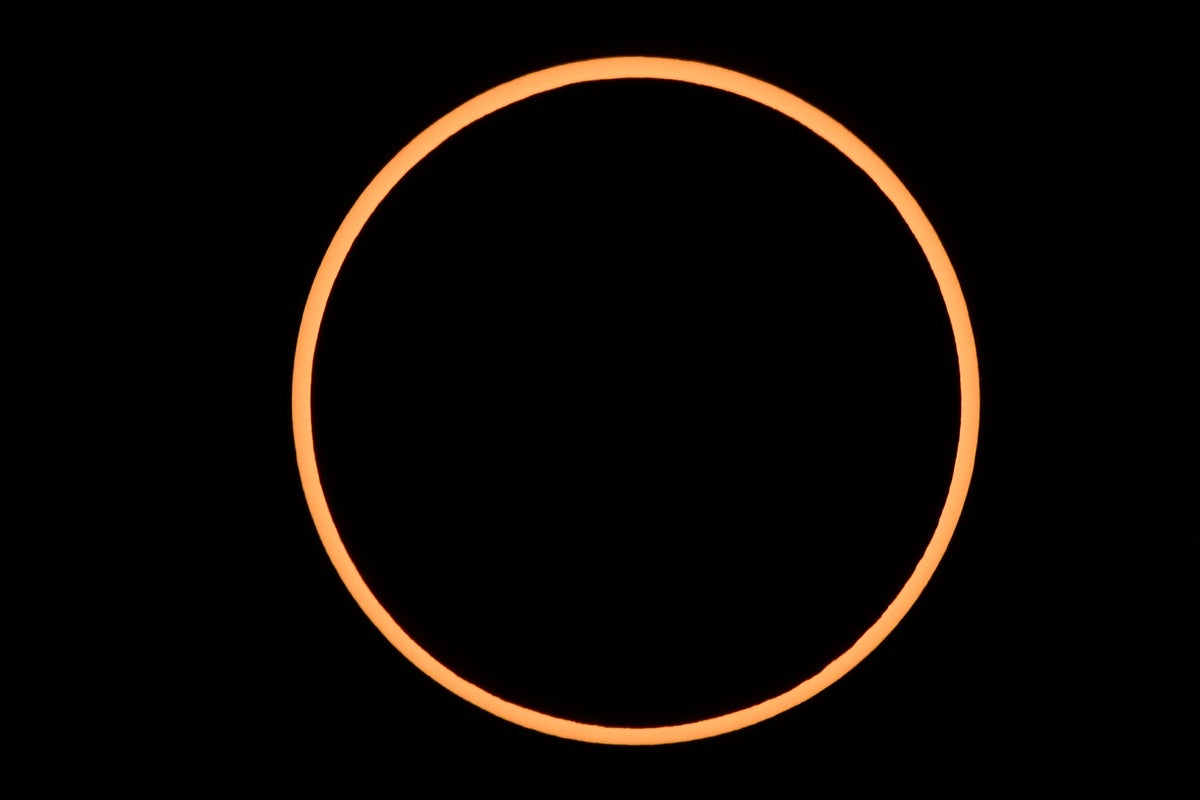
"On Tuesday parts of the Southern Hemisphere were graced by a ring of fire solar eclipsea celestial marvel that occurs when the moon is at or near its farthest distance from Earth and passes directly between our planet and the sun. Because the moon's diameter appears smaller than that of the sun, our star looks to us like a fiery halo of light in the sky, hence the eclipse's nickname."
"The solar eclipse, the first of 2026, reached its maximum at 7:12 A.M. EST. The phenomenon was visible in some parts of Antarctica, Africa and South America. The event, also called an annular solar eclipse, reportedly lasted about two hours from start to finish as viewed from Concordia Station in Antarctica, and the fiery ring was visible for just more than two minutes. Only sky-gazers in Antarctica would have seen the full ring."
"If you weren't among the lucky peopleor penguinsto have caught the eclipse, do not fret: another one is coming soon. A total lunar eclipsein which Earth passes between the sun and the moon, and we see our natural satellite's color turn to a bloody redis due to take place on March 2. And a total solar eclipsewhen the moon passes in front of the sun and fully obscures the star from our viewwill grace the Northern Hemisphere on August 12."
A ring-of-fire annular solar eclipse occurred over parts of the Southern Hemisphere on Feb 17, 2026. The moon was near its farthest distance from Earth, making its apparent diameter smaller than the sun and producing a fiery halo effect. The eclipse reached maximum at 7:12 A.M. EST and was visible in portions of Antarctica, Africa, and South America. Observers at Concordia Station in Antarctica saw the event last about two hours from start to finish, with the annular "ring" visible for just over two minutes. Only locations in Antarctica saw the full ring. Upcoming events include a total lunar eclipse on March 2 and a total solar eclipse on August 12.
Read at www.scientificamerican.com
Unable to calculate read time
Collection
[
|
...
]