"It's easy to take for granted that with the flick of a lighter or the turn of a furnace knob, modern humans can conjure flames cooking food, lighting candles or warming homes. For much of our history, archaeologists think, early humans could only make use of fire when one started naturally, like when lightning struck a tree. They could gather burning materials, move them and sustain them. But they couldn't start a fire on their own."
"At some point, somewhere, that changed. An early human discovered that by rubbing two sticks together or striking the right kinds of rocks together, at the right angle, with the right force, they too could create fire. Archaeologists have long wondered when that discovery happened. A new study, published in the journal Nature, provides the earliest evidence yet from a site in eastern Britain."
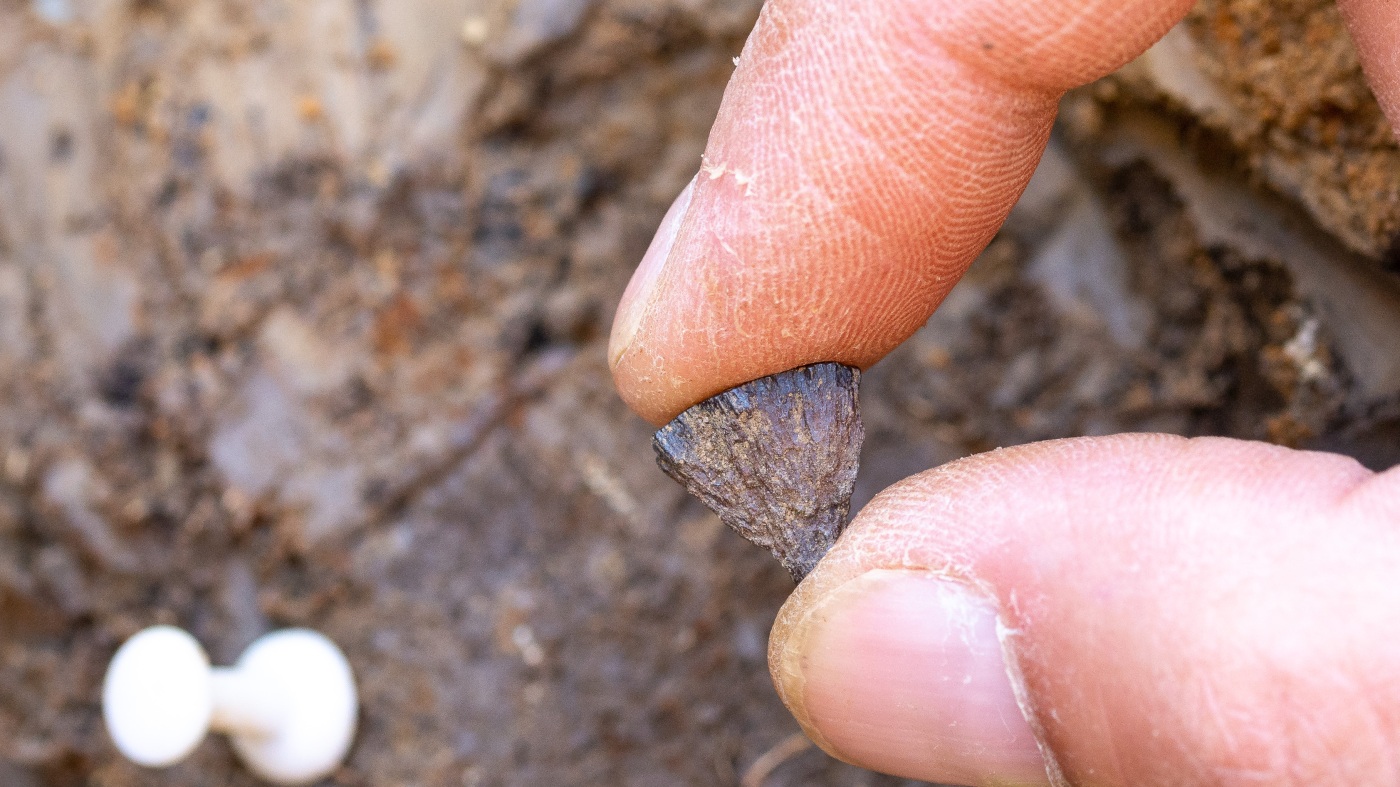
Archaeological excavations in eastern Britain uncovered a 400,000-year-old site containing a hearth-like feature with fire-cracked flint handaxes and fragments of iron pyrite. Geological analysis indicates pyrite is extremely rare locally, implying deliberate transport to the site for spark generation with flint. The assemblage provides the earliest direct evidence of humans intentionally making fire by striking pyrite against flint. The finding pushes evidence for controlled fire-making back by roughly 350,000 years and suggests early humans developed and purposefully used fire-starting techniques far earlier than previously recognized. The discovery implies advanced behavioral and technological capabilities among hominins during the Middle Pleistocene.
Read at www.npr.org
Unable to calculate read time
Collection
[
|
...
]