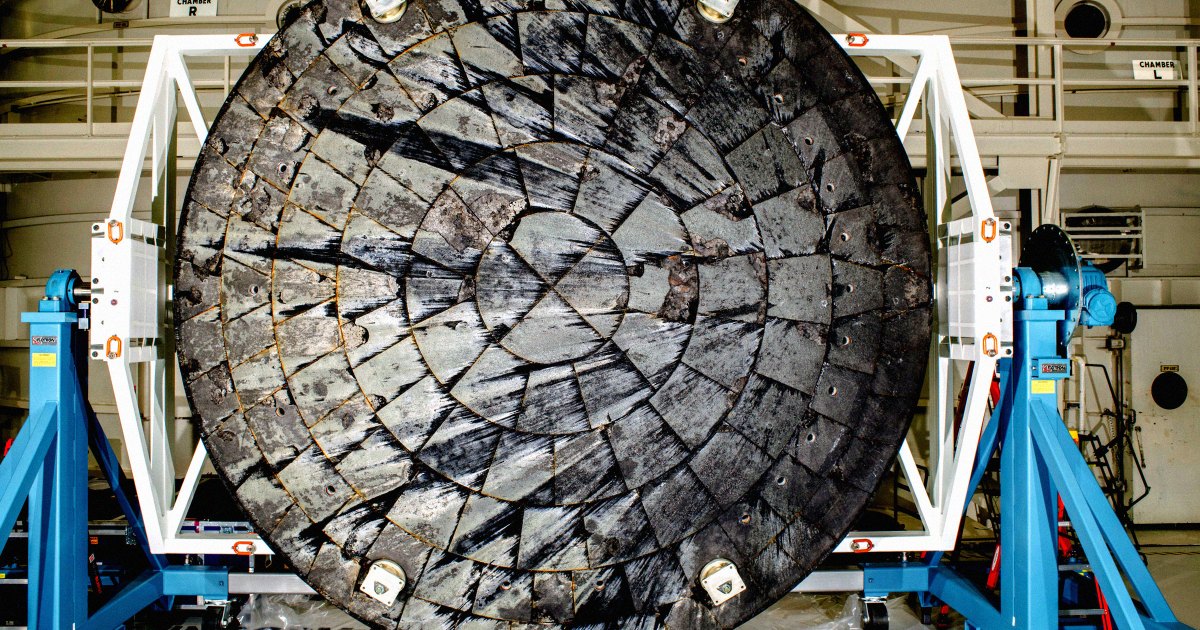
"Specifically, NASA has spent years since its successful uncrewed Artemis 1 mission studying how the extreme temperatures during reentry into the Earth's atmosphere affect Orion's heat shield. The Orion capsule sustained major damage after making its return in 2022. It cracked and chipped as a result of the extreme conditions during reentry. Over two years after the mission concluded, NASA said it had identified the root cause,"
"Over two years after the mission concluded, NASA said it had identified the root cause, with engineers determining that the "gases generated inside the heat shield's ablative outer material called Avcoat were not able to vent and dissipate as expected." "This allowed pressure to build up and cracking to occur, causing some charred material to break off in several locations," the agency wrote in a December 2024 statement."
"Yet instead of making major material changes to the heat shield itself after the fact - the Artemis 2 heat shield was assembled and installed even before the Artemis 1 mission - NASA opted to adjust the Artemis 2 mission's flight path instead, to ensure a gentler reentry. "Based on the data, we have decided - NASA unanimously and our decision-makers - to move forward with the current Artemis II Orion capsule and heat shield, with a modified entry trajectory," former NASA administrator Bill Nelson announced at the time."
Artemis 2 is scheduled to launch in less than two weeks, with the Space Launch System rolled out to the launch pad. The crewed flight will not attempt a lunar landing; that objective remains for Artemis 3. Artemis 1's Orion capsule sustained cracking and chipping during its 2022 atmospheric reentry. Engineers identified the root cause as trapped gases in the Avcoat ablative outer material that could not vent and dissipate, producing pressure and causing charred material to break away. NASA elected to retain the existing heat shield and alter Artemis 2's entry trajectory for a gentler reentry, while some experts remain unconvinced about safety.
Read at Futurism
Unable to calculate read time
Collection
[
|
...
]