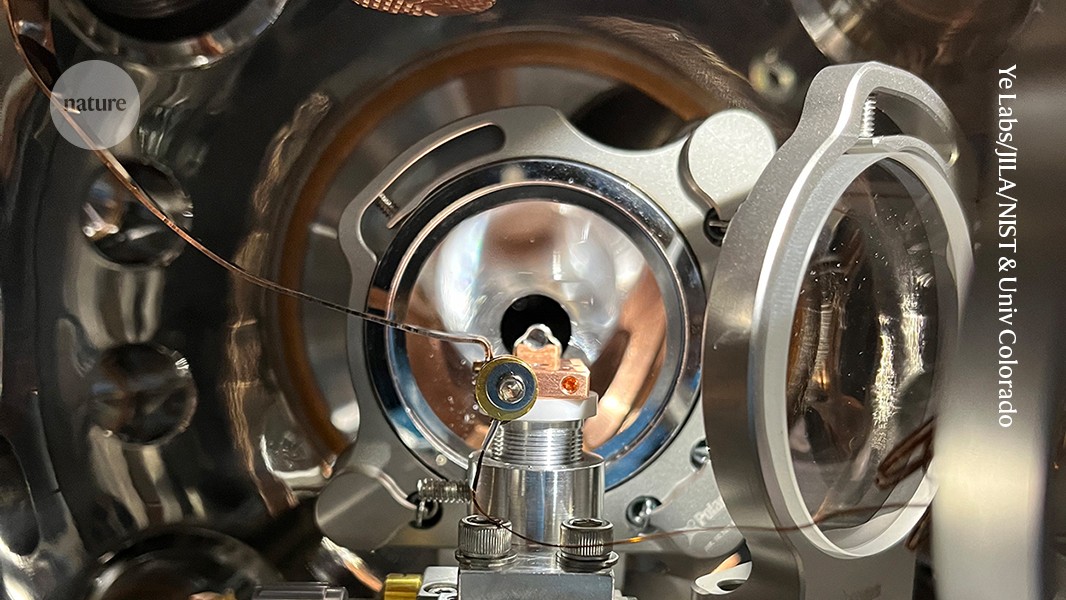
"Nearly a dozen research teams spread across China, Europe, Japan and the United States are closing in on assembling the components of such a clock, including a source of thorium-229 - which is radioactive - and a powerful continuous-wave ultraviolet laser to excite the energy transition."
"This is a really, really promising technology for commercial applications. That's because nuclear clocks could be resilient to noise and have a compact design for use outside the laboratory."
"You'll see nuclear-clock measurements in 2026, I'm sure. This clock is way closer than people think."
Physicists are advancing towards the development of a nuclear clock that measures energy transitions in atomic nuclei. The isotope thorium-229 has been identified for this purpose, with significant progress made in 2024 using laser technology. Researchers from various countries are collaborating to assemble the necessary components, including a source of thorium-229 and a powerful ultraviolet laser. Experts believe that nuclear clocks could outperform current optical atomic clocks in precision and offer practical applications outside laboratory settings.
Read at Nature
Unable to calculate read time
Collection
[
|
...
]