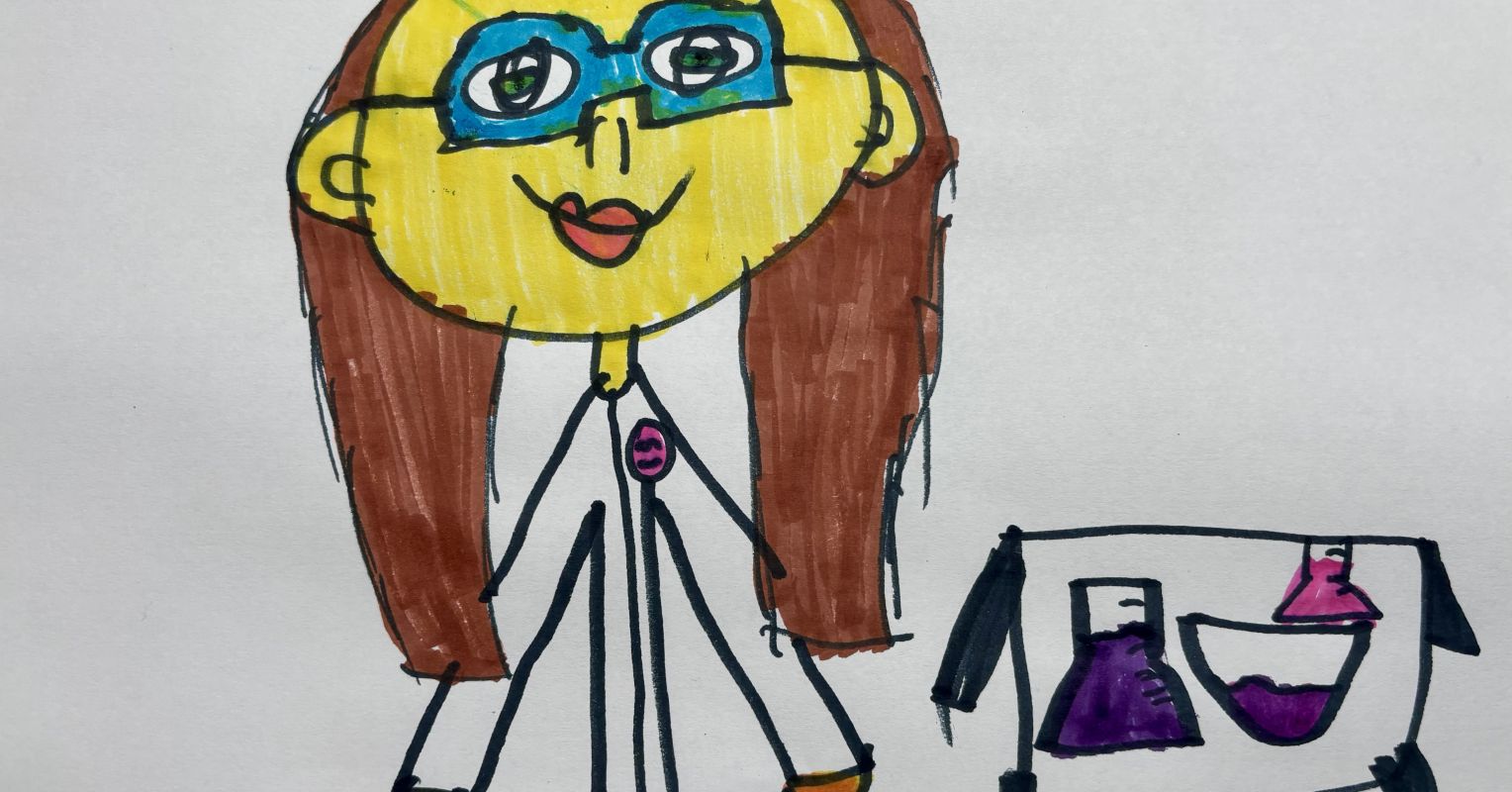
"What I asked them to do was simple; I said, "Draw a scientist." I didn't give them any other directions. I didn't make up this experiment-researchers have been asking children of various ages to "Draw a scientist" for more than five decades. They don't do this because they are interested in children's art; instead, they are interested in how children think about scientists and, more specifically, whether they think of them as male or female."
"The very first study using the "draw a scientist" task included drawings from children between the years of 1966 and 1977. Not surprisingly, nearly every single drawing collected featured a male scientist. In fact, less than 1 percent of children drew a woman. Importantly, both boys and girls participated in this study, so the girls were just as likely as the boys to picture scientists as exclusively male (Chambers, 1983)."
Researchers have repeatedly used the "draw a scientist" task to measure how children perceive scientists' gender. Early studies from 1966–1977 found nearly all drawings depicted male scientists, with under 1 percent depicting women. Both boys and girls produced male-dominated images, indicating a pervasive male-scientist stereotype. The pattern does not reflect a blanket tendency to draw males across occupations, since children often drew teachers as female. Over subsequent decades, children became less likely to draw exclusively male scientists, and younger children showed higher rates of drawing female scientists than older children do.
Read at Psychology Today
Unable to calculate read time
Collection
[
|
...
]