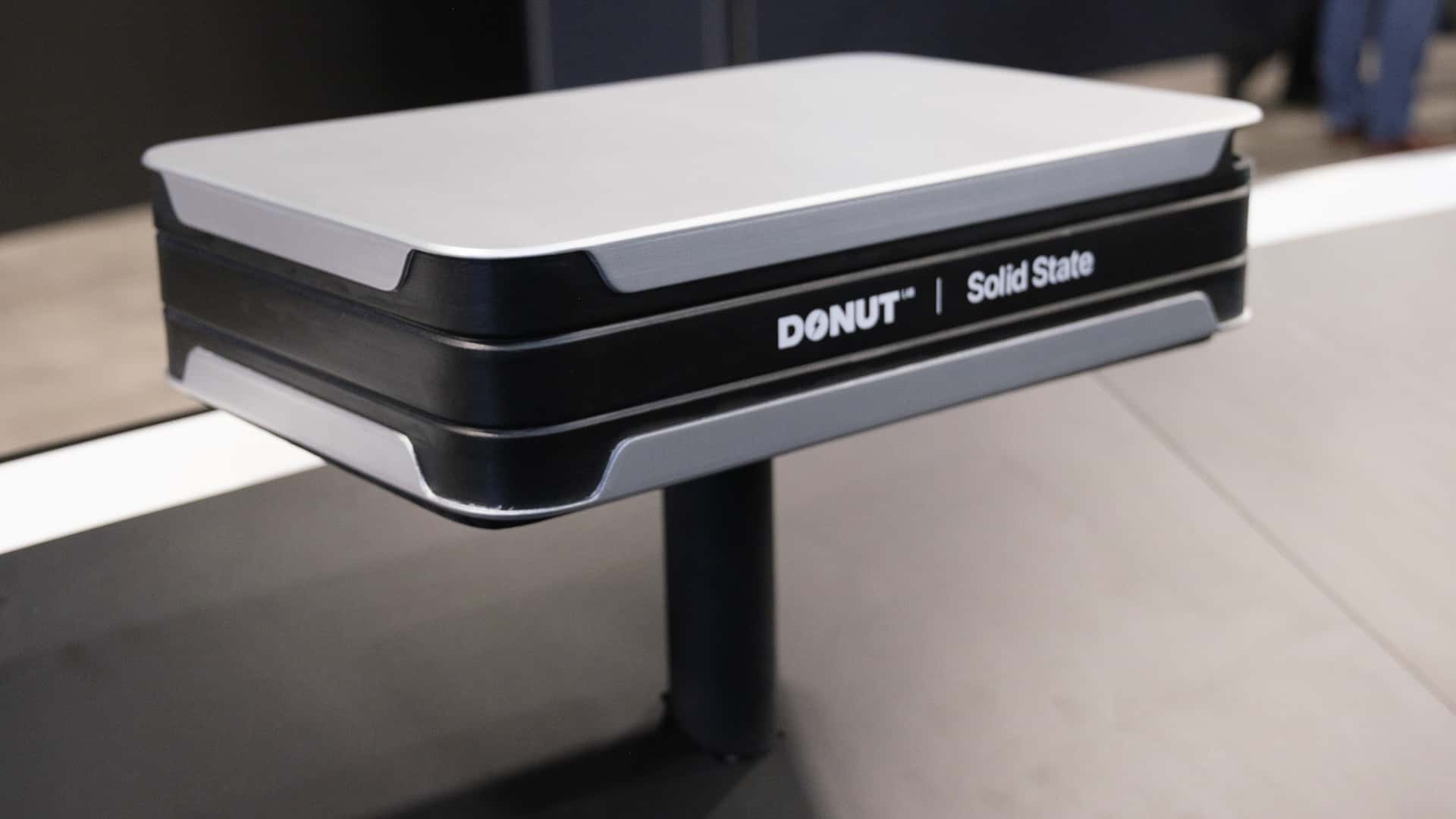
"When the Finnish startup unveiled its battery at the Consumer Electronics Show in January, the specifications shocked the battery industry. How could an unknown company leapfrog Toyota, Factorial, and CATL in the solid-state race? The startup claimed 400 watt-hours per kilogram of energy density, a 100,000-cycle lifespan and a charge time of roughly five minutes."
"There's a very clear distinction between a battery and a supercapacitor. Both store energy, but they do it differently. A battery relies on chemical reactions inside the cell. A supercapacitor stores energy in an electrical field, enabling rapid charge and discharge. But when left idle, it bleeds charge quickly. Batteries, by contrast, can hold a charge for far longer."
"To prove just that, the researchers charged the cell to 50% capacity, left it to idle for 240 hours, and then measured how much energy was remaining in the cell. The cell showed very little voltage drop over that period and retained nearly 98% of the energy stored before the idle period."
Donut Lab, a Finnish startup, released independent test results demonstrating its all-solid-state battery technology. The company claimed revolutionary specifications including 400 watt-hours per kilogram energy density, 100,000-cycle lifespan, and five-minute charge time at CES in January. These claims raised skepticism in the battery industry, particularly after discovery that a related company, Nordic Nano, had developed a supercapacitor with identical energy density specifications. To address accusations that Donut's battery was actually a supercapacitor in disguise, the company conducted a self-discharge performance test through VTT Technical Research Centre of Finland. The test charged the cell to 50% capacity, left it idle for 240 hours, and measured remaining energy. The results showed minimal voltage drop and 98% energy retention, demonstrating battery characteristics rather than supercapacitor behavior, since supercapacitors rapidly lose charge when idle.
#all-solid-state-battery #battery-technology #supercapacitor-comparison #energy-storage #battery-testing
Read at insideevs.com
Unable to calculate read time
Collection
[
|
...
]