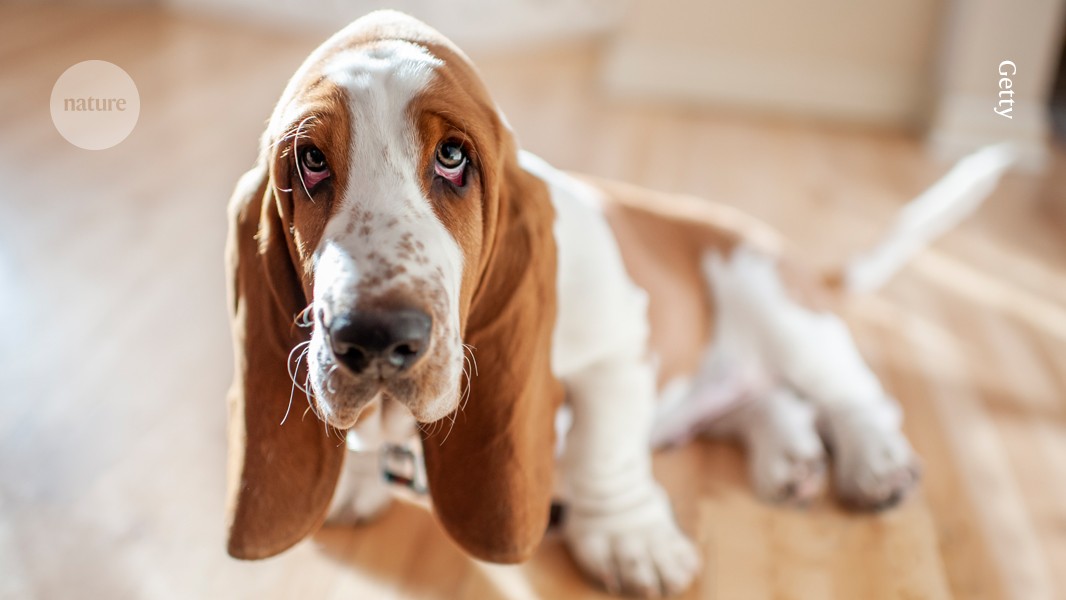
DNA variants near the MSRB3 gene are linked to ear length in dogs. Analysis included more than 3,000 dogs, wolves and coyotes and identified genetic differences associated with longer versus shorter ears. The investigation began after an undergraduate noticed a cocker spaniel's long, floppy ears and questioned their cause. Ear length and carriage vary widely across breeds because of natural adaptation and human selective breeding. Short, upright ears may reduce heat loss in cold climates, long ears can help sweep scents toward the nose in scent hounds, and upright ears can slightly improve hearing.
"A gene that is important for human hearing could determine whether a dog's ears are pendulous like a basset hound's or stubby like a rottweiler's, according to a genetic analysis of more than 3,000 dogs, wolves and coyotes. The study, presented on 11 January at the Plant and Animal Genome Conference in San Diego, California, found that DNA variants near a gene called MSRB3 are linked to ear length in dogs. The results were also published in December in Scientific Reports."
"Scratching an itch The project was inspired by Cobain, a gregarious, nine-year-old American cocker spaniel whose hobbies include morning swims in a local creek and following people from room to room. One day, Anna Ramey, an undergraduate working in a canine genetics laboratory at the University of Georgia in Athens, gazed at her dog Cobain's long, floppy ears and wondered: why?"
"The length and carriage of dog ears vary widely from breed to breed. Some of this evolved naturally: short, upright ears are thought to lose less heat than long, droopy ones, and canines from cold climates tend to have smaller ears than do those that hail from warm regions. But selective breeding has also shaped dog ears. The basset hound's long ears are said to boost its hunting acuity by sweeping scents towards its nose, whereas a German shepherd's upright ears might slightly enhance its hearing."
Read at Nature
Unable to calculate read time
Collection
[
|
...
]