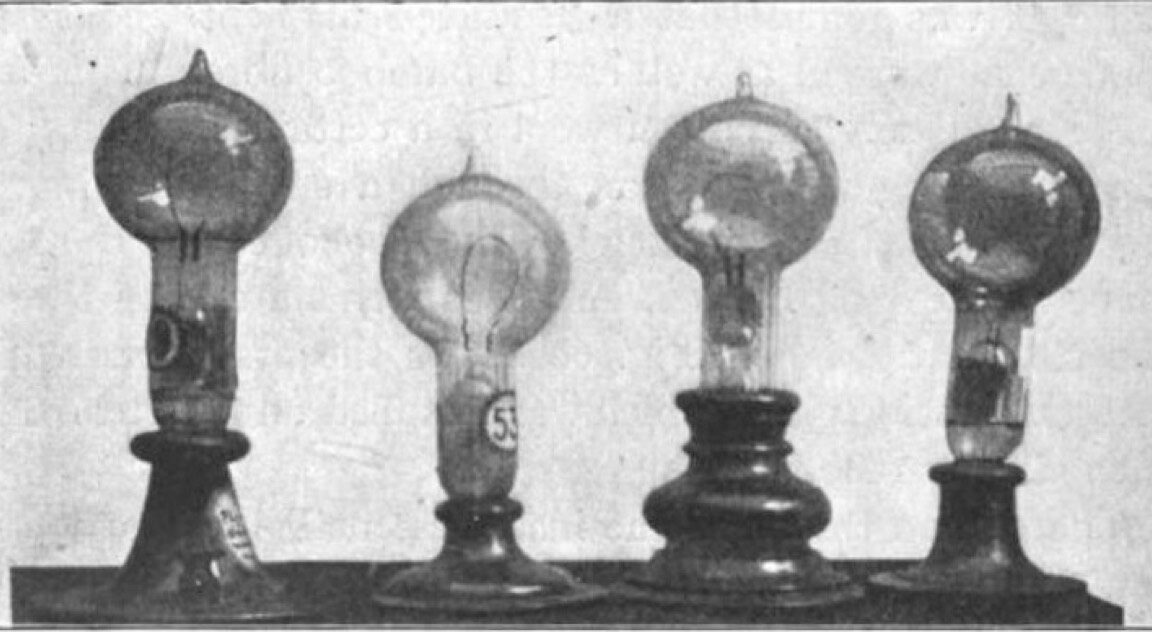
"Graphene is the thinnest material yet known, composed of a single layer of carbon atoms arranged in a hexagonal lattice. That structure gives it many unusual properties that hold great promise for real-world applications: batteries, super capacitors, antennas, water filters, transistors, solar cells, and touchscreens, just to name a few. The physicists who first synthesized graphene in the lab won the 2010 Nobel Prize in Physics."
""To reproduce what Thomas Edison did, with the tools and knowledge we have now, is very exciting," said co-author James Tour, a chemist at Rice University. "Finding that he could have produced graphene inspires curiosity about what other information lies buried in historical experiments. What questions would our scientific forefathers ask if they could join us in the lab today? What questions can we answer when we revisit their work through a modern lens?""
Graphene consists of a single atomic layer of carbon atoms in a hexagonal lattice, giving extreme thinness and exceptional electrical, mechanical, and chemical properties suitable for batteries, supercapacitors, antennas, water filters, transistors, solar cells, and touchscreens. Early graphene synthesis earned the 2010 Nobel Prize in Physics. Reanalysis of historical incandescent-bulb experiments indicates Thomas Edison may have produced graphene as a byproduct of carbonized filaments. Edison tested many filament materials and found carbonized bamboo yielded long-lived filaments. Contemporary researchers replicated and investigated those methods to explore low-cost, small-scale graphene production and to uncover insights from historical experimental approaches.
Read at Ars Technica
Unable to calculate read time
Collection
[
|
...
]