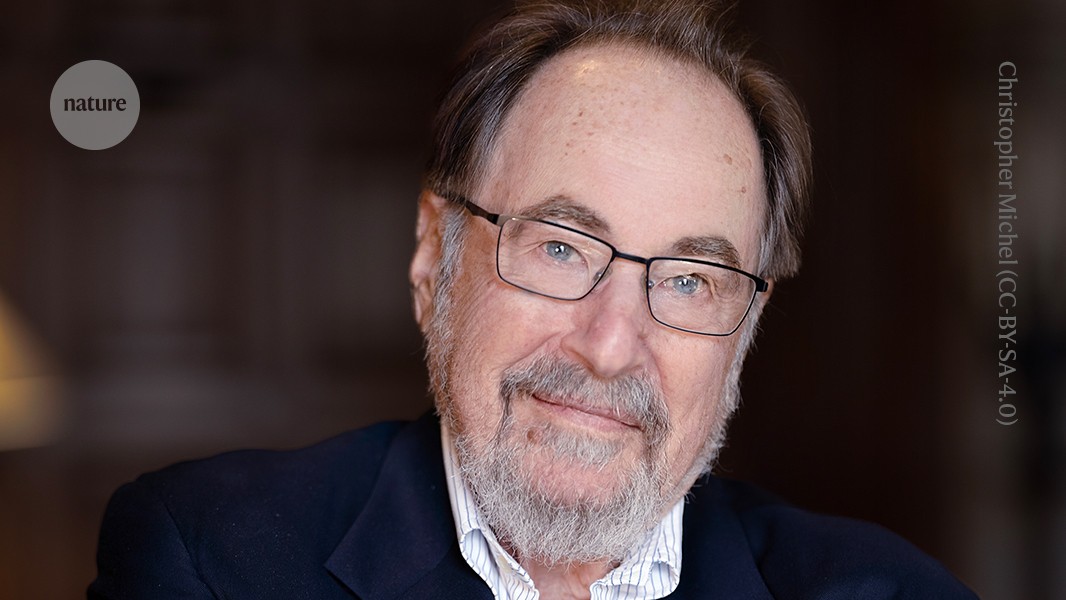
David Baltimore demonstrated that certain cancer-causing RNA viruses carry an enzyme that makes DNA from an RNA template. That enzyme, reverse transcriptase, explained how retroviruses can form genomic DNA copies that persist in infected cells and be inherited by daughter cells, then later generate more viral RNA. Howard Temin proposed the DNA-copy mechanism and shared the 1975 Nobel Prize with Baltimore and Renato Dulbecco. The discovery challenged the central dogma that information flows only from DNA to RNA to protein. Reverse transcriptase became an essential tool for converting and characterizing RNA molecules. Baltimore trained at Swarthmore, MIT and The Rockefeller University and established a laboratory at MIT in 1968.
"The world has lost a giant of virology, molecular biology and science advocacy with the death of David Baltimore, at age 87. Baltimore demonstrated that RNA viruses that cause cancer contain an enzyme capable of directing the synthesis of DNA from an RNA template. We now know this enzyme as reverse transcriptase and the viruses as retroviruses, reflecting the backward flow of genetic information in this type of virus. The discovery of reverse transcriptase in 1970 explained a mystery in the capabilities of these viruses."
"It clarified how an RNA virus could generate a genomic copy of itself that could persist in the infected cell and be inherited by daughter cells. It also revealed how, much later, cells could produce further copies of the viral RNA. The idea that this mechanism could involve the formation of a DNA copy of the RNA genome was proposed by Howard Temin, who shared the 1975 medicine Nobel with Baltimore and Renato Dulbecco."
Read at Nature
Unable to calculate read time
Collection
[
|
...
]