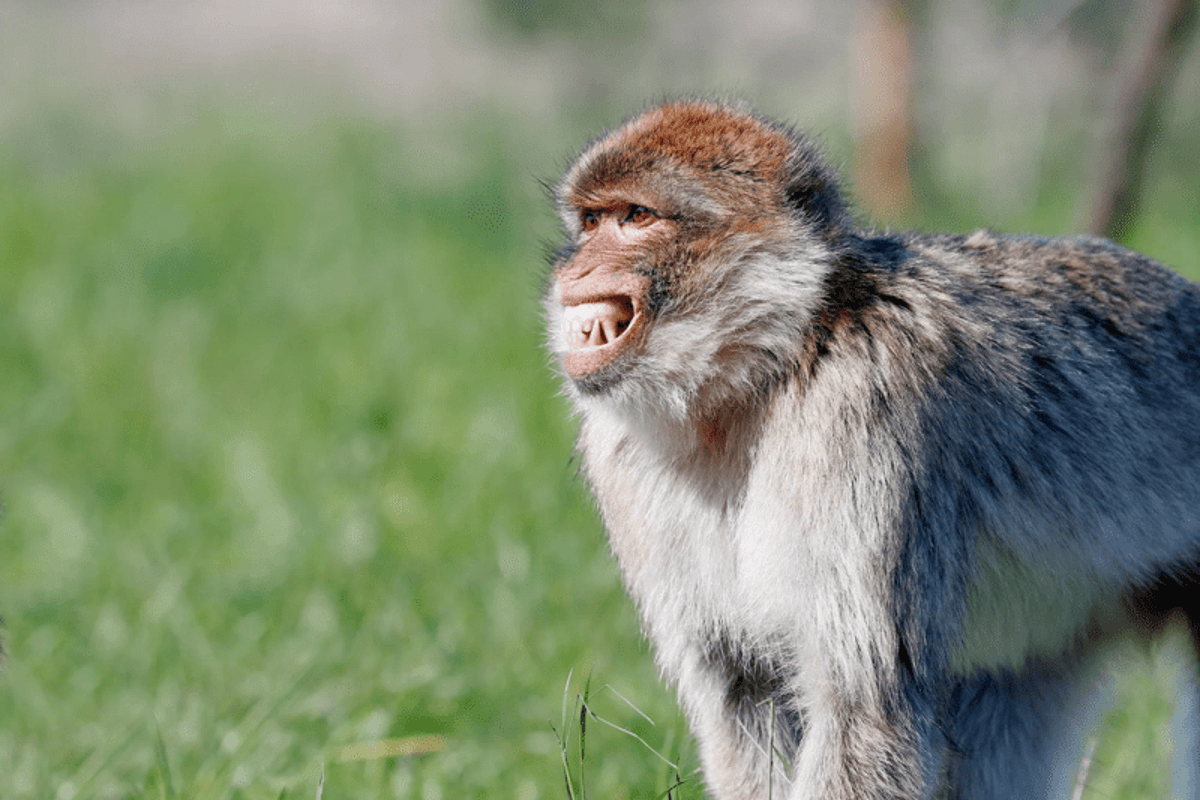
"To find out what's going on in the brain during facial expressions, researchers turned to rhesus macaques, Old World monkeys with face musculature and neuroanatomy that are similar to that of humans. They recorded neural activity while the animals interacted with one anotheras well as with digital avatars and video of other macaquesin the lab. The team's results, published today in Science, came as a surprise:"
"the monkeys' expressions, from a threatening face to a friendly lip-smacking one, were generated by both the medial cortex and lateral cortex. These brain regions were long thought to operate independently, with the medial dealing with spontaneous emotional expressions and the lateral controlling voluntary actions. Our study did not show that at all, says co-lead author Geena Ianni, a neurology resident at the University of Pennsylvania. It showed that all regions participated in the production of all kinds of facial expressions."
Rhesus macaques produce facial expressions through coordinated activity in both medial and lateral cortical regions. The medial and lateral cortices both contribute to generating expressions ranging from threatening faces to friendly lip-smacking gestures. The lateral cortex encodes information with rapid, millisecond-scale shifts to coordinate quick muscle movements. The medial cortex operates with a different tempo, encoding information more slowly. Neural activity was recorded while animals engaged with conspecifics, digital avatars, and video stimuli. The observed neural dynamics challenge a strict division of medial regions for spontaneous emotional expressions and lateral regions for voluntary facial movements.
Read at www.scientificamerican.com
Unable to calculate read time
Collection
[
|
...
]