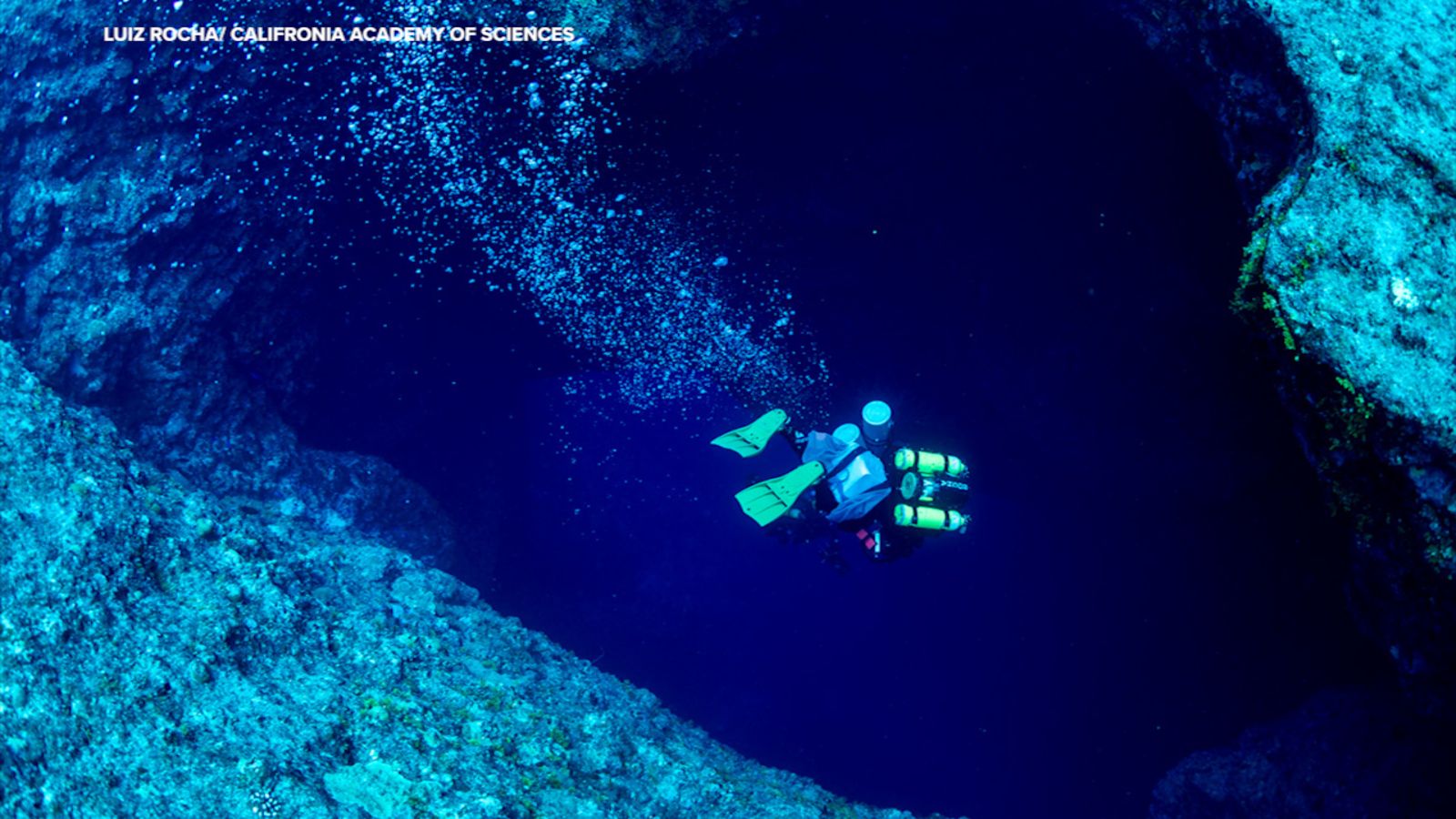
Researchers from the California Academy of Sciences returned from an expedition to deep coral reefs off Guam, exploring the Twilight Zone at depths over 330 feet. The team identified roughly 20 previously unknown deep-reef species, including sea slugs and hermit crabs. The 300–500 foot depth range hosts communities distinct from shallow and deeper waters. The team uses technical diving, autonomous reef monitoring structures, and environmental DNA sampling to collect specimens. High costs, complex logistics, and time demands limit study of these depths, leaving substantial knowledge gaps and concern about unexplored biodiversity and conservation needs.
"So those depths are very hard to get to. We can do it by technical diving, which is the way we do it. But you can also do it with ROVs and with submarines. They're much more expensive than the way we do it. But because it requires a lot of logistics, a lot of time, a lot of funding. The end result is that those that are really hard to study, very few people do it, and we don't know much about it,"
"So this is really filling in a gap in an area of the ocean. This depth range between about 300 ft to 500 ft, that we really know so little about. And we are finding that a lot of the species that inhabit this area are completely different than those that are found in shallow water. And we're also finding that, they're different than the organisms that have been found in deeper water,"
Read at ABC7 San Francisco
Unable to calculate read time
Collection
[
|
...
]