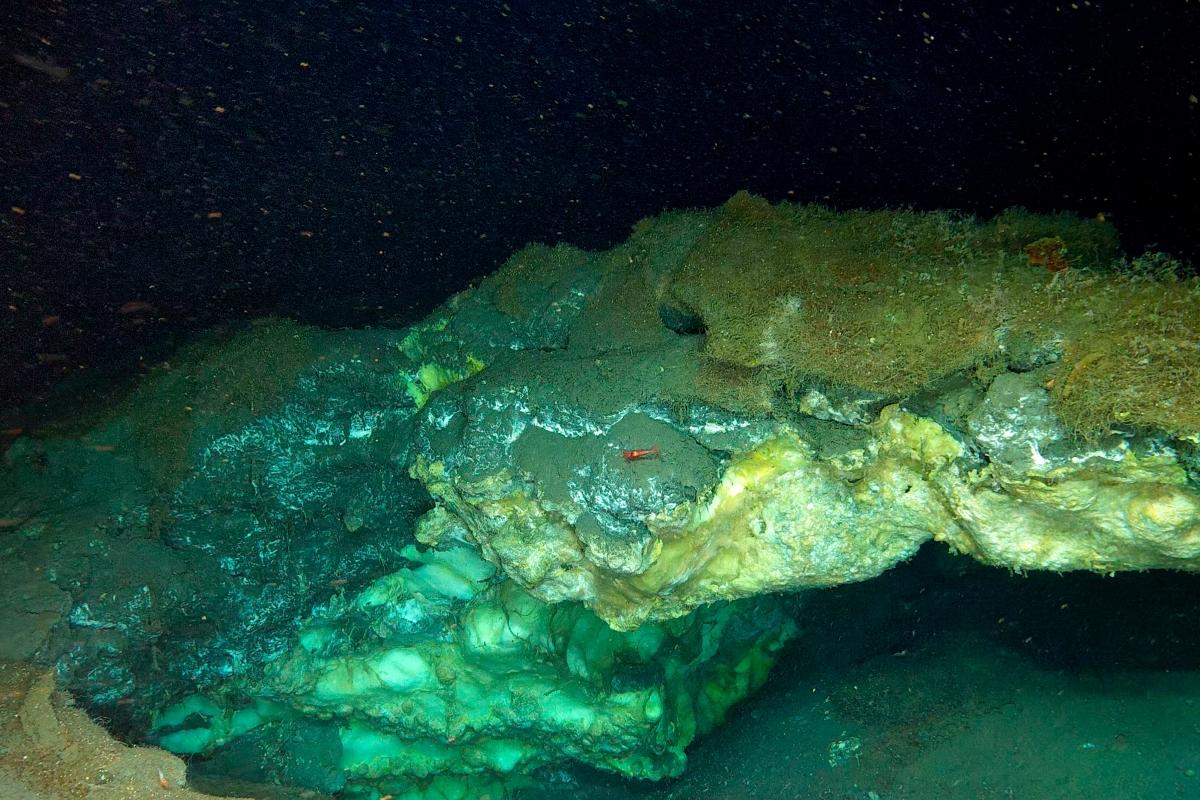
Freya hydrate mounds occur off Greenland at about 3,640 meters depth and consist of crystallized methane and other gases forming towering structures. These gas hydrate cold seeps function as frozen reefs that host a peculiar assemblage of deep-sea organisms adapted to extreme conditions. The mounds emit methane flares reaching roughly 3,300 meters upward, representing the tallest flares recorded. The mounds undergo collapse and reformation over time, indicating active geological dynamics linked to tectonics and methane cycling. Observations used underwater robots during an Arctic deep-sea expedition. The features expand knowledge of deep Arctic ecosystems and gas hydrate behavior.
"One might suppose that at its greatest depths, the icy, dark water would be inhospitable to muchbut a new discovery reminds us that that is far from the case. Off the coast of Greenland, the deep seafloor is littered with towering mounds made of crystallized methane and other gases. Known as the Freya hydrate mounds, these structures act like a frozen reef, a haven for creatures that have evolved to live in environments unlike any other on Earth."
"Incredibly, the mounds, which are also known as gas hydrate cold seeps, release methane gas flares some 3,300 meters up into the waterthe tallest such flares ever recorded. Over time the mounds collapse and reform, a dynamic process that the researchers say gives insights into the Arctic's various ecosystems. These are not static deposits, Giuliana Panieri, a study co-author and a professor at the Arctic University of Norway, said in a statement about the new research. They are living geological features, responding to tectonics, deep"
Read at www.scientificamerican.com
Unable to calculate read time
Collection
[
|
...
]