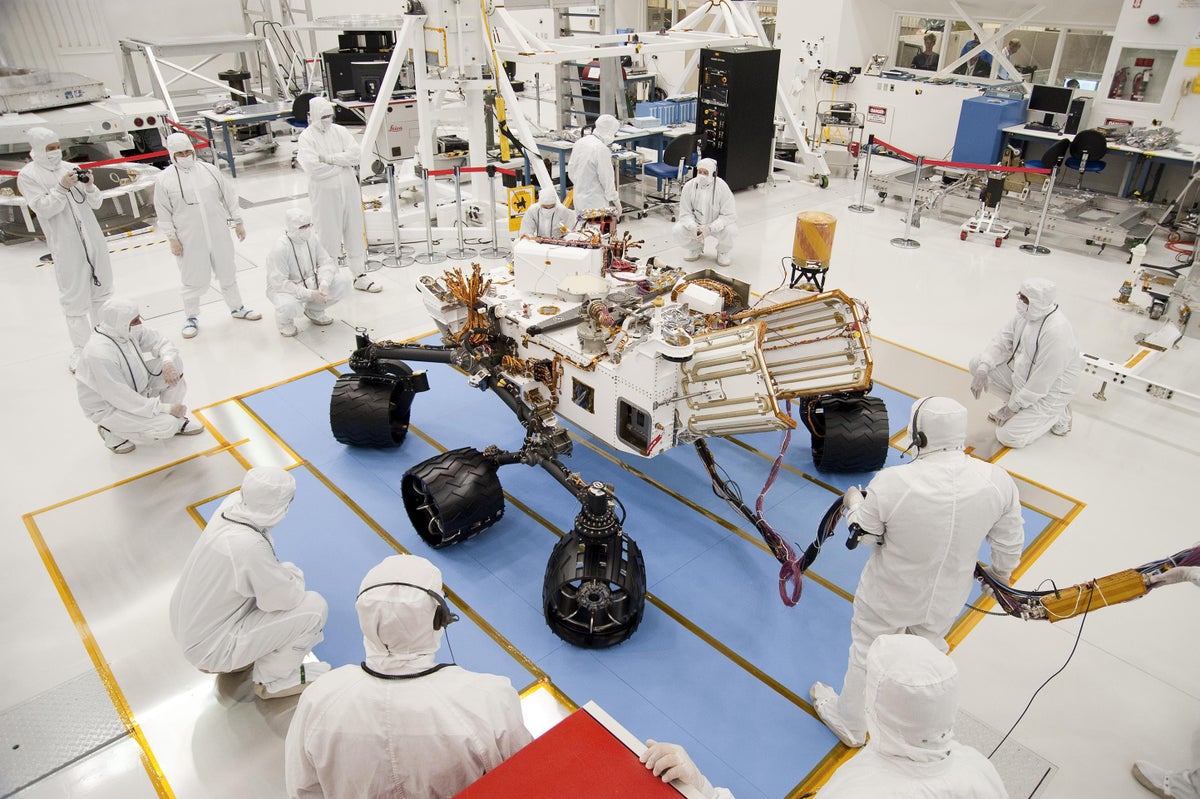
Tersicoccus phoenicis is an actinobacterium found in spacecraft clean rooms. It survives intensive antimicrobial cleaning by entering a dormant, hibernation-like state. In dormancy it shows no growth and almost no metabolism yet can revive when conditions improve. The bacterium cannot form protective spores, unlike other clean-room survivors. Dormant cells evade detection by standard swab-and-culture methods used in clean rooms. Dormant T. phoenicis could potentially hitch a ride on spacecraft and revive on other planets, posing a planetary protection concern. The bacterium was detected in NASA and ESA clean-room facilities preparing spacecraft.
"That's important because other clean-room survivors had been known to live through disinfection by forming spores, which are thick-walled structures that protect bacteria from high temperatures or toxins such as ethanol. The actinobacterium Tersicoccus phoenicis can't form these spores, but a new study published in the journal Microbiology Spectrum shows that it can go into a state similar to hibernation. In this state, it has no growth and almost no metabolism but has the ability to wake up when conditions improve."
"While in this dormant state, T. phoenicis can't be detected by the usual method of swabbing surfaces and checking which bacteria grow in culture from the swabs. That means it could theoretically sneak aboard spacecraft that are supposed to be free of Earth contaminants. If such a bug hitched a ride to another planet, it could wake up upon arrival and potentially disrupt existing extraterrestrial life."
Read at www.scientificamerican.com
Unable to calculate read time
Collection
[
|
...
]