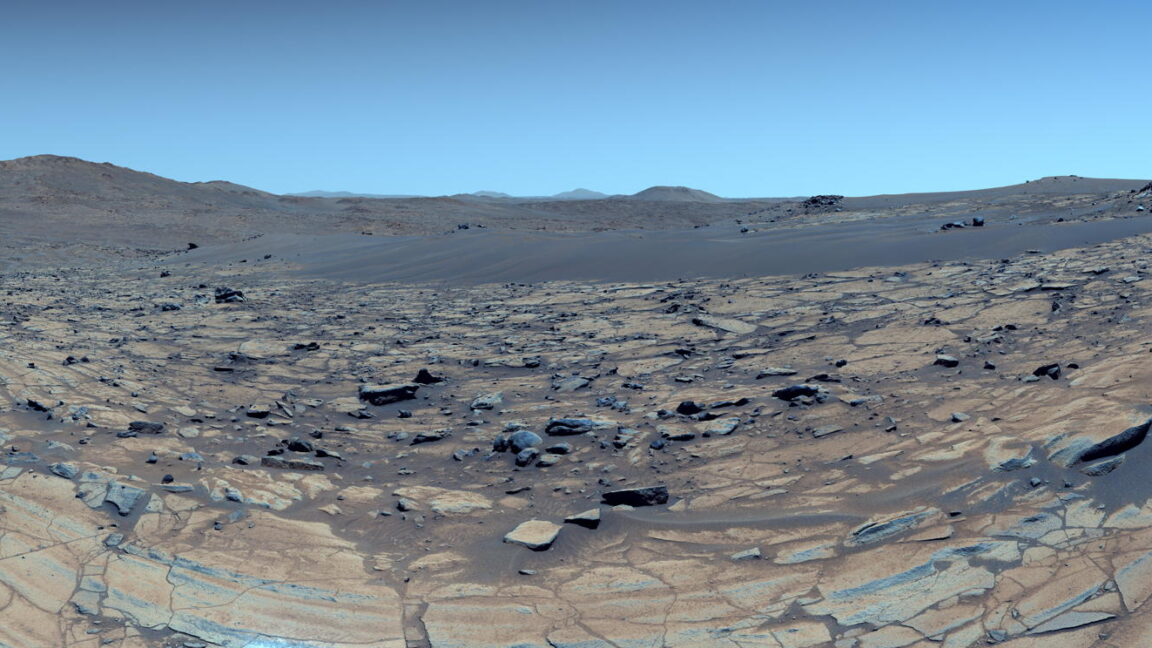
"This is important because it means these rocks were less likely to have been altered in a hydrothermal environment, where scalding hot water was temporarily released by melting ice caused by volcanism or a meteorite impact. Instead, they appear to have been altered under modest temperatures and persistent heavy rainfall. The authors found distinct similarities between the chemical composition of these clay pebbles with similar clays found on Earth dating from periods in our planet's history when the climate was much warmer and wetter."
"The paper concludes that these kaolinite pebbles were altered under high rainfall conditions comparable to "past greenhouse climates on Earth" and that they "likely represent some of the wettest intervals and possibly most habitable portions of Mars' history". Furthermore, the paper concludes that these conditions may have persisted over time periods ranging from thousands to millions of years. Perseverance recently made headlines also for the discovery of possible biosignatures in samples it collected last year, also from within Jezero crater."
"These precious samples have now been cached in special sealed containers on the rover for collection by a future Mars sample return mission. Unfortunately, the mission has recently been cancelled, delaying Earth-based examination of the cached samples for many years. Crucial to this future analysis is the so-called "Knoll criterion" - which states that for something to be evidence of life, an observation has to not just be explicable by biology; it has to be inexplicable without it."
Rocks in Jezero crater show alteration under modest temperatures and persistent heavy rainfall rather than brief hydrothermal events. Chemical composition of kaolinite pebbles closely matches clays on Earth formed during warmer, wetter greenhouse intervals. The kaolinite indicates high-rainfall conditions comparable to past greenhouse climates on Earth and likely marks some of Mars' wettest and possibly most habitable intervals. These conditions may have persisted for thousands to millions of years. Perseverance collected possible biosignature-bearing samples from Jezero that are cached in sealed containers. Cancellation of the Mars sample return delays Earth-based analyses required to determine unambiguous biological evidence.
Read at Ars Technica
Unable to calculate read time
Collection
[
|
...
]