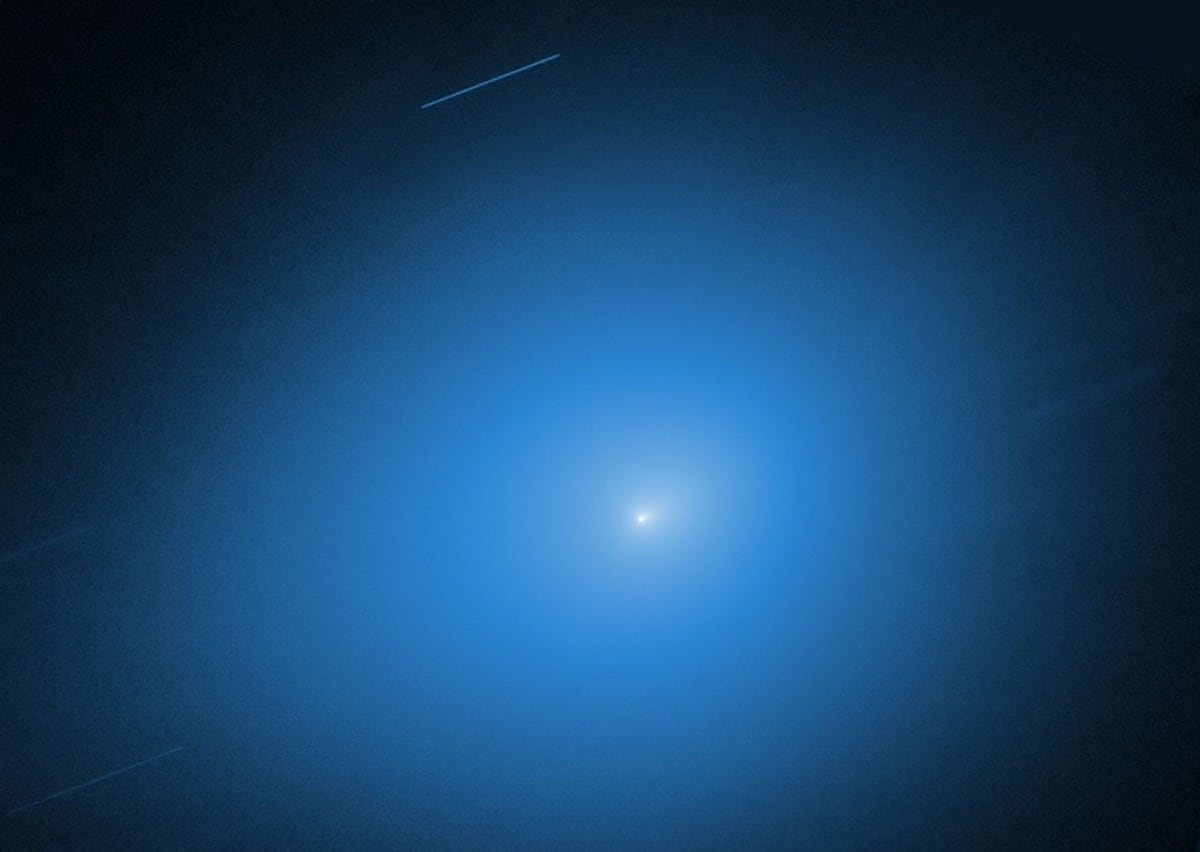
"3I/ATLAS differs physically from other comets. A higher volume of gases, mostly carbon dioxide, has been discovered in the coma [cloud of gas and dust]. A greater amount of ionized nickel has also been observed, a material that had not been seen in other comets, he explains. The unusual structure of the 3I/ATLAS' coma and the chemical composition detected so far could be explained by the combination of a high metal content and abundant water ice."
"On December 19, this wandering celestial body will be 270 million kilometers (168 million miles) from our planet almost twice as far away as the Sun. It's a distance that seems unbridgeable to humans, but it is considered close for an object from another star system. As it passes through our solar system, its presence offers the international scientific community the chance to analyze its composition, giving us a glimpse of conditions in other corners of the galaxy."
Comet 3I/ATLAS is an interstellar object discovered five months ago by the ATLAS network in Rio Hurtado, Chile. It is the third known interstellar visitor after Oumuamua and comet Borisov. On December 19 it will pass 270 million kilometers from Earth, about twice the Earth–Sun distance, a relatively close approach for an object from another star. Observations show an unusually gas-rich coma dominated by carbon dioxide and an elevated presence of ionized nickel. The coma structure and detected chemistry could result from high metal content combined with abundant water ice. Relative proportions of ices differ from solar system comets. Social media speculation proposed a technological origin; Avi Loeb explored that hypothesis and NASA dismissed the idea.
Read at english.elpais.com
Unable to calculate read time
Collection
[
|
...
]