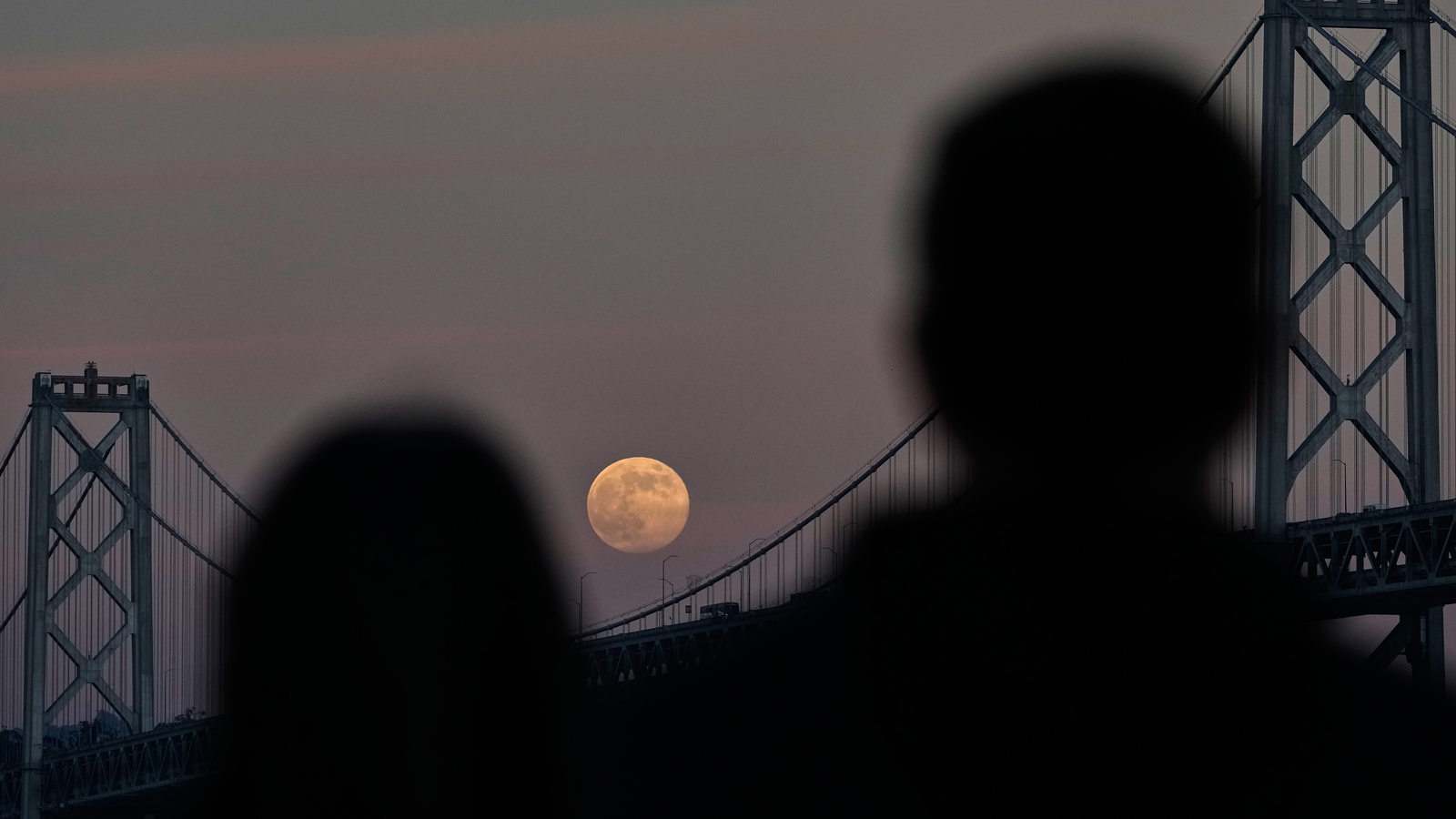
"Bright full moons, dazzling meteor shower displays and remarkable total eclipses will give stargazers plenty of reasons to look to the sky in 2026. The new year kicks off with the full wolf moon on Saturday, the first of three supermoons this year. Jupiter, the largest planet in our solar system, will appear south of the silvery orb, according to EarthSky."
"But in 2026, there will be 13, with two in May. The second full moon in a month is known as a blue moon - like the phrase "once in a blue moon." Typically, full moons happen every 29 days, while most months in our calendar last 30 or 31 days, so the months and moon phases don't exactly align - resulting in a blue moon about every 2 years."
2026 will feature bright full moons, numerous meteor showers, and notable eclipses. The year begins with a full wolf moon that is the first of three supermoons, with Jupiter appearing south of the lunar disk. The supermoon's brightness may reduce visibility of the Quadrantid meteor shower, which peaks early January between 4 and 7 p.m. ET. There will be 13 full moons in 2026, including a blue moon in May. Additional supermoons occur in November and December, with December's supermoon the closest of the year at about 221,667 miles (356,740 km). The Farmers' Almanac lists full-moon names and dates for 2026.
Read at ABC7 Los Angeles
Unable to calculate read time
Collection
[
|
...
]