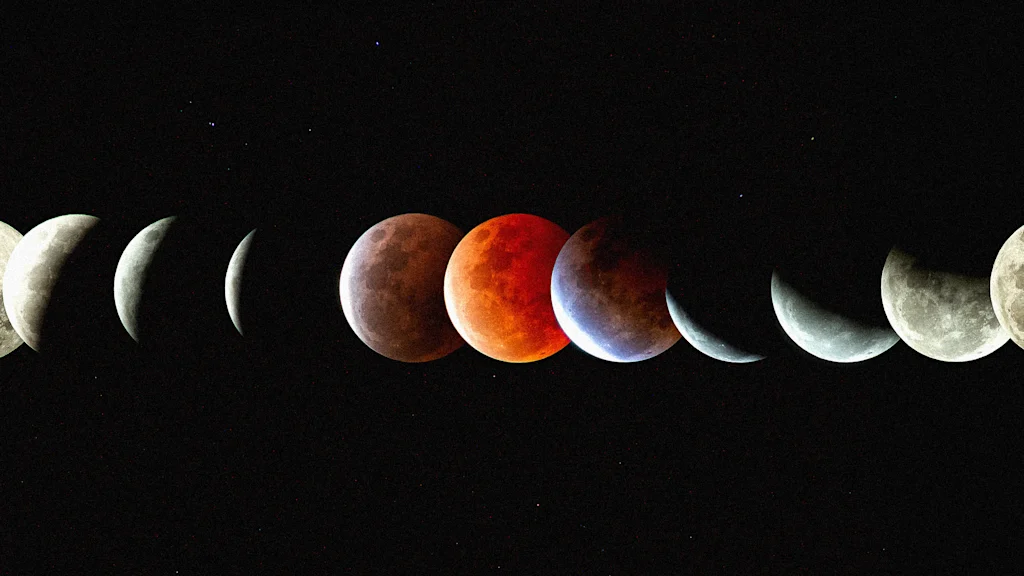
"A blood moon occurs during a total lunar eclipse, as the Earth passes directly between the Sun and Moon and casts a shadow across the moon's surface. The moon appears red due to the way the Earth's atmosphere filters sunlight. This effect, known as Rayleigh scattering, is the same reason that the sky takes on magnificent shades of red and orange around sunset."
"The eclipse, which will be visible across most of the U.S., is set to begin at 3:33 a.m. EST on March 3. The eclipse won't begin to enter totality until around 6:04 a.m. EST, reaching its greatest point at 6:33 a.m. ET, just minutes before the Full Moon peak."
"It's safe to look directly at a lunar eclipse (unlike a solar eclipse, which you need to wear protective eyewear to safely view, minus during complete totality). For a more dramatic observing experience, seek a dark environment away from bright lights. Binoculars or a telescope can also enhance your view."
A blood moon occurs during a total lunar eclipse when Earth passes directly between the Sun and Moon, casting a shadow that makes the moon appear red due to Rayleigh scattering in Earth's atmosphere. This rare event coincides with March's full worm moon, named for the season when Earth thaws. The eclipse begins at 3:33 a.m. EST on March 3, reaching totality at 6:04 a.m. EST with its greatest point at 6:33 a.m. ET. Unlike solar eclipses, lunar eclipses are safe to view without protective glasses, though binoculars enhance the experience. This celestial event won't occur again until New Year's Eve 2028-2029.
Read at Fast Company
Unable to calculate read time
Collection
[
|
...
]