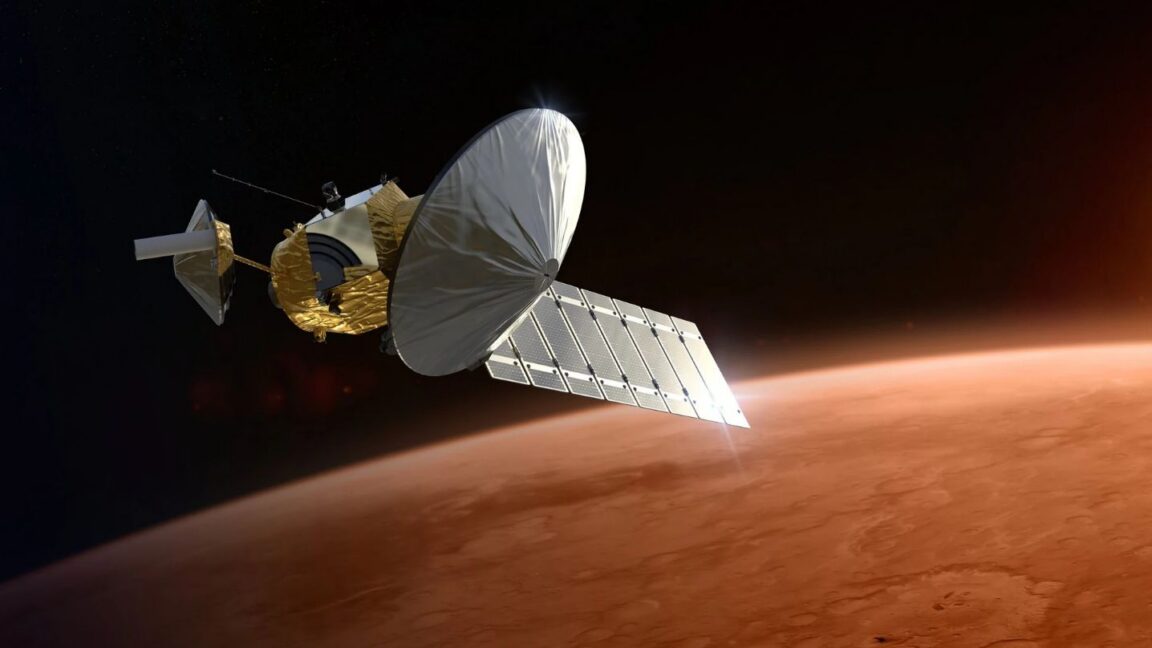
"Provide communication and data exchange between assets in the Mars vicinity, the Mars surface, and Earth anticipated to operate at Mars through 2035. Provide Doppler, range, and time transfer to support positioning, navigation, and timing for assets anticipated to operate at Mars through 2035. Provide communications services to existing operational missions."
"The bill provided $700 million for NASA to develop the orbiter and specified funding had to be awarded 'not later than fiscal year 2026,' which ends September 30, 2026. This legislation was seemingly crafted by Cruz's office to favor a single contractor, Rocket Lab. However, multiple sources have told Ars it was poorly written and therefore the competition is more open than intended."
NASA issued a pre-solicitation for developing a Mars orbiter spacecraft funded by legislation providing $700 million, with awards required by September 2026. The spacecraft will relay communications between Mars assets, the surface, and Earth while providing navigation and timing support through 2035. The legislation was crafted to potentially favor Rocket Lab, but poor wording has opened the competition to multiple contractors. The pre-solicitation seeks industry feedback on objectives and requirements rather than formal proposals. Four primary mission objectives include communication relay, navigation support, services to existing missions, and support for Entry, Descent, and Landing demonstrations.
#mars-orbiter-spacecraft #nasa-communications-relay #government-procurement-contract #space-navigation-systems #interplanetary-infrastructure
Read at Ars Technica
Unable to calculate read time
Collection
[
|
...
]