"Researchers have shown that they can piggyback a signal on a 4,400-kilometer-long telecom cable that runs from California to Hawaii, allowing it to act like 44,000 separate seismic-activity detectors. Their method takes advantage of impurities found in glass fibre-optic cables, which reflect light differently when they are stretched and distorted by the pressure of seismic waves. Science: Seafloor telecom cable transformed into giant earthquake detector 04:17 The origin of an ancient boat"
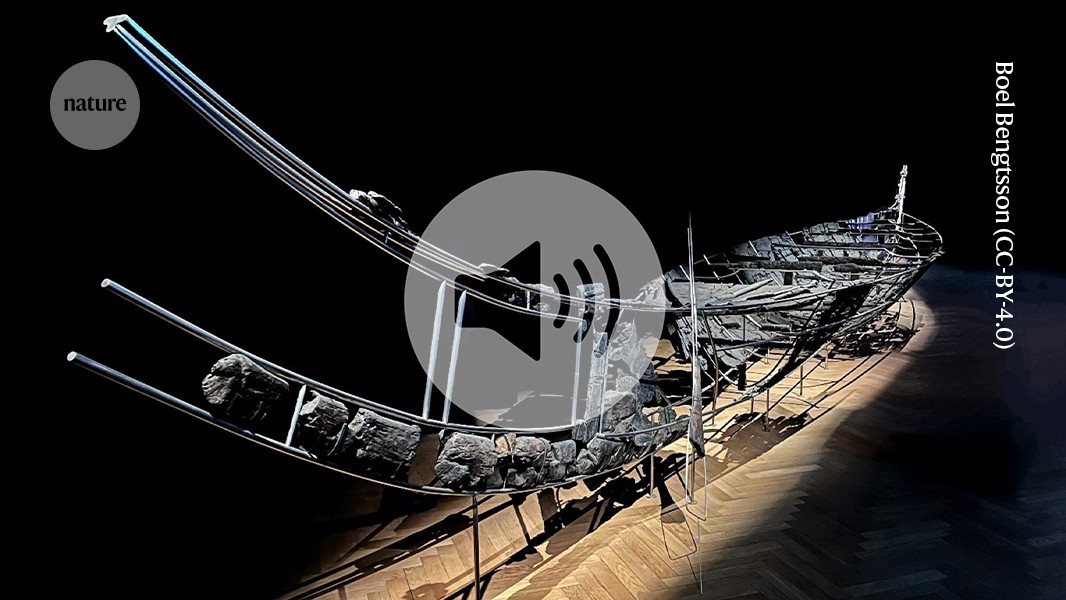
"Chemical analysis of the caulking found on the wood an ancient boat has helped researchers identify the origins of the vessel, that sank off the coast of Denmark 2,400 years ago. The team's analysis suggests it voyaged from much farther away that had been thought - perhaps coming from the Baltic Sea region. The team also found a fingerprint left in the caulk, although who it belonged to is unknown."
"Some plants called cycads ( Zamia spp.) heat up to attract the beetles that pollinate them. These beetles have heat-seeking sensors in their antennae, which they use locate the plants. Male cycads warm up around 3 hours before females, meaning that beetles head to them before first carrying pollen over to the females."
A 4,400-kilometre undersea fibre-optic telecom cable running from California to Hawaii can function as 44,000 seismic detectors by piggybacking a signal and exploiting glass impurities that alter reflected light when stretched by seismic waves. Chemical analysis of caulking on a 2,400-year-old plank boat recovered off Denmark indicates the vessel likely voyaged from the Baltic Sea region and preserves a human fingerprint in the caulk. Some cycads (Zamia spp.) thermally warm to attract beetle pollinators; beetles use heat-sensitive antennae to locate male plants that warm roughly three hours before females. The exoplanet PSR J2322-2650b exhibits an unusually lemon-like shape.
#fibre-optic-seismic-sensing #ancient-maritime-archaeology #cycad-pollination-heating #exoplanet-discovery
Read at Nature
Unable to calculate read time
Collection
[
|
...
]