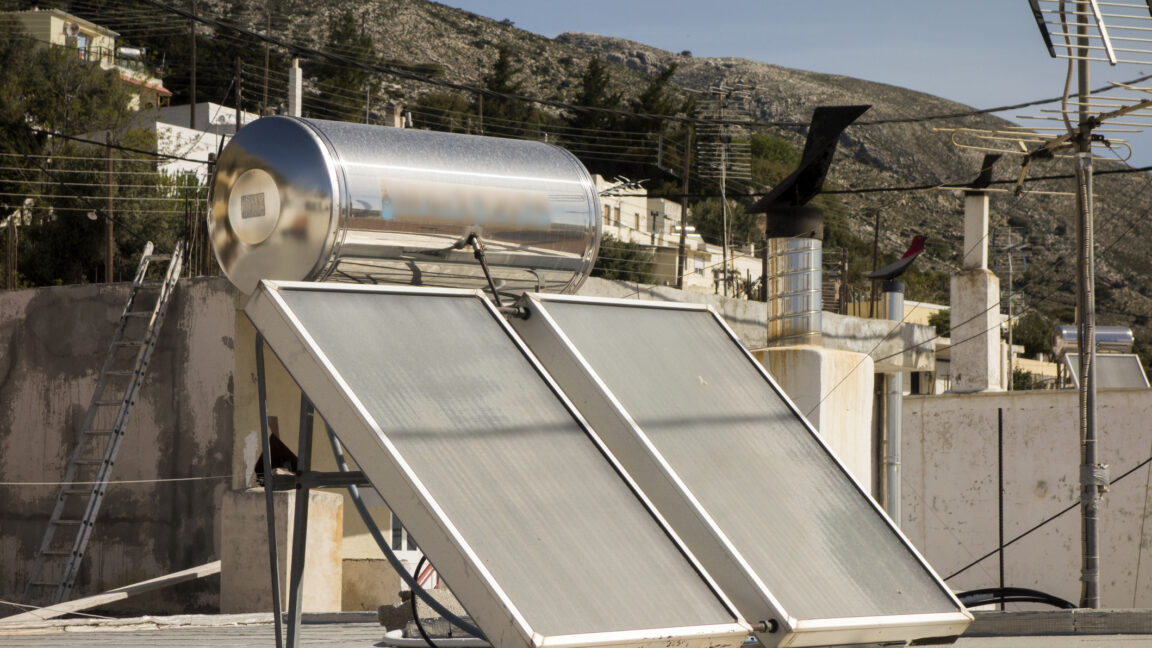
"Heating accounts for nearly half of the global energy demand, and two-thirds of that is met by burning fossil fuels like natural gas, oil, and coal. Solar energy is a possible alternative, but while we have become reasonably good at storing solar electricity in lithium-ion batteries, we're not nearly as good at storing heat. To store heat for days, weeks, or months, you need to trap the energy in the bonds of a molecule that can later release heat on demand."
"In the past, MOST energy storage solutions have been plagued by lackluster performance. The molecules either didn't store enough energy, degraded too quickly, or required toxic solvents that made them impractical. To find a way around these issues, the team led by Han P. Nguyen, a chemist at the University of California, Santa Barbara, drew inspiration from the genetic damage caused by sunburn. The idea was to store energy using a reaction similar to the one that allows UV light to damage DNA."
Nearly half of global energy demand is for heating, and two-thirds of that heating is supplied by fossil fuels. Solar energy offers an alternative, but long-duration heat storage remains difficult. Molecular solar thermal (MOST) storage captures sunlight by converting molecules into higher-energy isomers that can later release heat on demand. Previous MOST systems suffered from low energy density, rapid degradation, or reliance on toxic solvents that hinder practicality. A promising approach adapts DNA photochemistry: ultraviolet light can link adjacent thymine bases into a (6-4) lesion that converts into a "Dewar" isomer, which kinks the DNA helix and can cause mutations. Evolution produced an enzyme to counteract that damage.
Read at Ars Technica
Unable to calculate read time
Collection
[
|
...
]