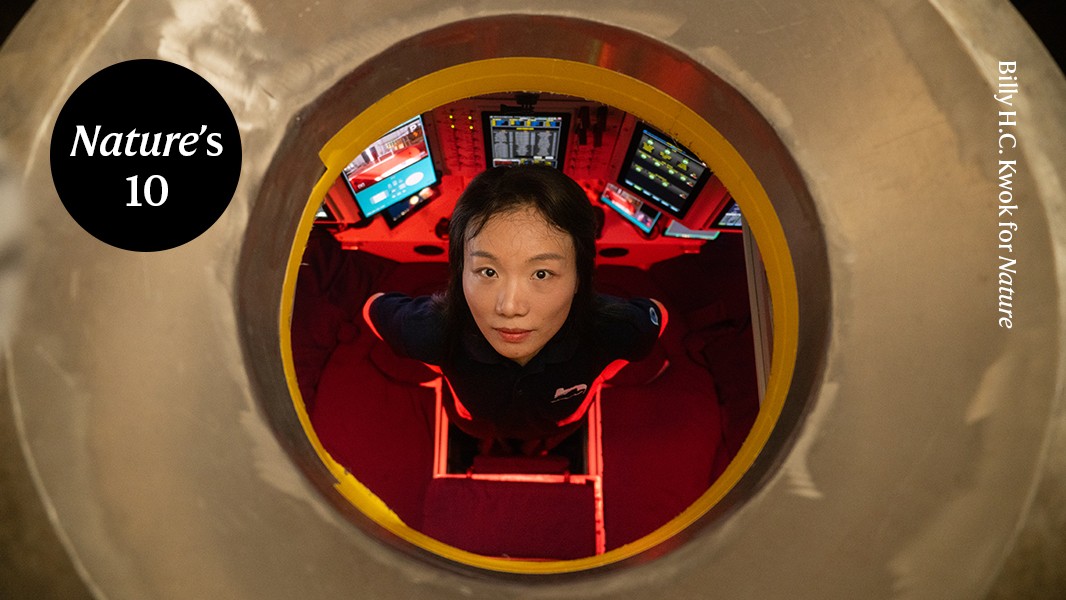
Mengran Du observed a thriving ecosystem more than nine kilometres below the ocean surface in the Kuril-Kamchatka Trench, within the hadal zone beyond six kilometres depth. Vessel lights revealed ghostly bristleworms swimming among fields of blood-red tubeworms. The ecosystem relies on methane, hydrogen sulfide and other compounds in fluids seeping from the seafloor. Chemosynthetic microbes convert inorganic carbon into carbohydrates that support gastropods, tubeworms, clams and other animals. Several encountered species appear likely to be new to science. Coastal research experience enabled rapid in situ identification of taxa on the seafloor, aiding expedition documentation.
"Looking out of the Fendouzhe submersible, more than nine kilometres below the ocean surface, Mengran Du knew she was seeing something totally new to science. The vessel's lights illuminated a thriving ecosystem in which ghostly bristleworms swim among fields of blood-red tubeworms. Du and her colleagues were exploring the hadal zone - the lowermost layer of the ocean, found beyond depths of six kilometres."
"The ecosystem discovered by the Fendouzhe crew relies on an unusual source of energy. Unlike most life at the surface, which depends on sunlight, this hadal-zone ecosystem derives energy from methane, hydrogen sulfide and other compounds dissolved in fluids that seep up from the ocean floor. Chemosynthetic microbes use these energy-rich molecules to convert inorganic carbon into carbohydrates that then support the rest of the ecosystem."
Read at Nature
Unable to calculate read time
Collection
[
|
...
]