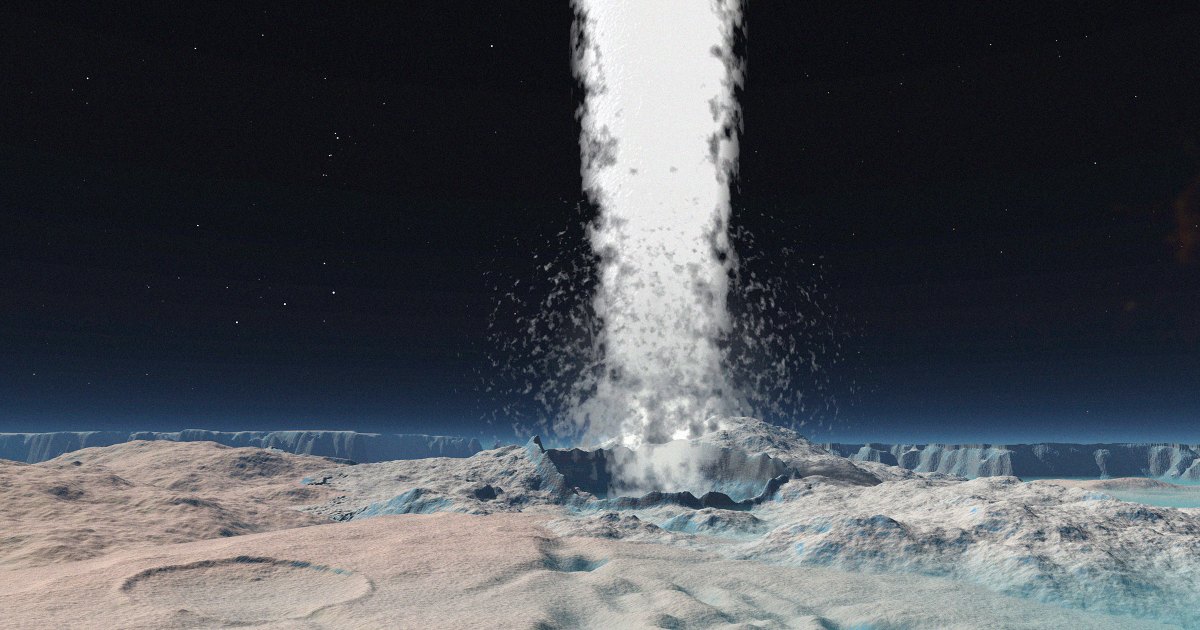
"Mysterious interstellar object 3I/ATLAS reached its perihelion, or its closest point to the Sun, earlier this year, shedding copious amounts of ice and dust in the process. The material has formed enormous jets that reach out like a tail behind the visitor, which is widely believed to be a comet - and even an " anti-tail " that faces the Sun."
""We were all surprised," Josep Trigo-Rodríguez, lead author of a yet-to-be-peer-reviewed paper and staff researcher at the Institute of Space Sciences in Spain, told Live Science. "Being a comet formed in a remote planetary system, it is remarkable that the mixture of materials forming the surface of the body has resemblance with trans-Neptunian objects, bodies formed at [a] large distance from the Sun but belonging to our planetary system.""
"Trigo-Rodríguez and his colleagues used the Joan Oró Telescope at the Montsec Observatory in Spain to carefully study 3I/ATLAS' perihelion in late October, a point at which solar system comets usually release the largest amount of material as they're heated up by the Sun. The team observed detailed images of jets of gas and dust particles being released, concluding that 3I/ATLAS was showing signs of cryovolcanism."
3I/ATLAS reached perihelion earlier this year and shed copious ice and dust. The expelled material formed enormous jets and an anti-tail that faces the Sun. Observations from the Joan Oró Telescope at the Montsec Observatory in Spain during late October captured detailed images of gas and dust jets. The nucleus surface could be dotted with erupting ice volcanoes produced by cryovolcanism driven by internal heat and sublimating volatiles. Sublimating carbon dioxide ice may react with metals such as nickel and iron sulfides in the core, oxidizing them and contributing to eruptive activity, making 3I/ATLAS similar to trans-Neptunian objects.
Read at Futurism
Unable to calculate read time
Collection
[
|
...
]