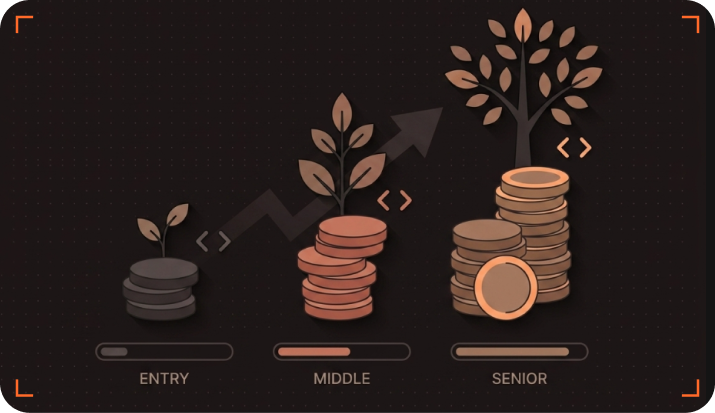
"Scala salaries are not always easy to compare. Many public salary numbers mix gross and net pay, while bonuses, equity, stock grants, and performance incentives often sit outside the headline figure. Scala makes the picture even more complex because it is a specialized language used in distributed systems, Big Data, enterprise backends, streaming platforms, and high-reliability infrastructure. That specialization usually raises compensation, but the exact rate depends on location, domain, framework expertise, and seniority."
"The original guide reviews Scala developer compensation across junior, middle, and senior levels in six markets: the USA, Canada, the UK, Germany, Poland, and Ukraine. It includes monthly net salary ranges and hourly net rates for 2026, with the figures focused on base pay rather than total compensation."
"The biggest factor behind Scala compensation is the type of work the developer does. Standard backend Scala roles, such as building APIs or microservices with Play Framework or Akka HTTP, are well paid but usually sit at the lower end of the Scala market. Higher rates appear when Scala is used for Big Data, distributed systems, and streaming work. Developers working with Apache Spark, Kafka stream processing, Hadoop ecosystems, and large-scale ETL pipelines often earn more than backend-focused Scala developers."
"Company type also matters. Well-funded scale-ups and large technology companies may offer lower base salaries but stronger equity or stock packages. Banks, insurers, and enterprise clients often provide higher base salaries w"
Scala developer compensation is difficult to compare because public figures may combine gross and net pay and may exclude bonuses, equity, stock grants, and performance incentives. Scala is a specialized language used in distributed systems, Big Data, enterprise backends, streaming platforms, and high-reliability infrastructure, which often increases compensation. Rates depend on location, domain, framework expertise, and seniority. Compensation is reviewed across junior, middle, and senior levels in the USA, Canada, the UK, Germany, Poland, and Ukraine, using monthly net salary ranges and hourly net rates for 2026 focused on base pay. Work type is the biggest driver: backend API and microservice roles using Play Framework or Akka HTTP tend to be lower, while Big Data, distributed systems, and streaming work using Spark, Kafka, Hadoop, and large ETL pipelines tends to be higher. Company type also affects the mix of base salary versus equity or stock, with scale-ups and large tech firms often emphasizing equity and banks and enterprise clients often emphasizing higher base pay.
#scala-development #compensation-benchmarking #distributed-systems #big-data--streaming #salary-vs-total-compensation
Read at Medium
Unable to calculate read time
Collection
[
|
...
]