"Scala looks like Java's cryptic cousin. At first, it's weird symbols and DSLs: // Javaint total = 0;for (int i : numbers) total += i; // Scalaval total = numbers.foldLeft(0)(_ + _) Same logic, same JVM, different mental model: transformations instead of loops. Operators like ::, =>, and <- initially made me feel like I was reading a secret dialect."
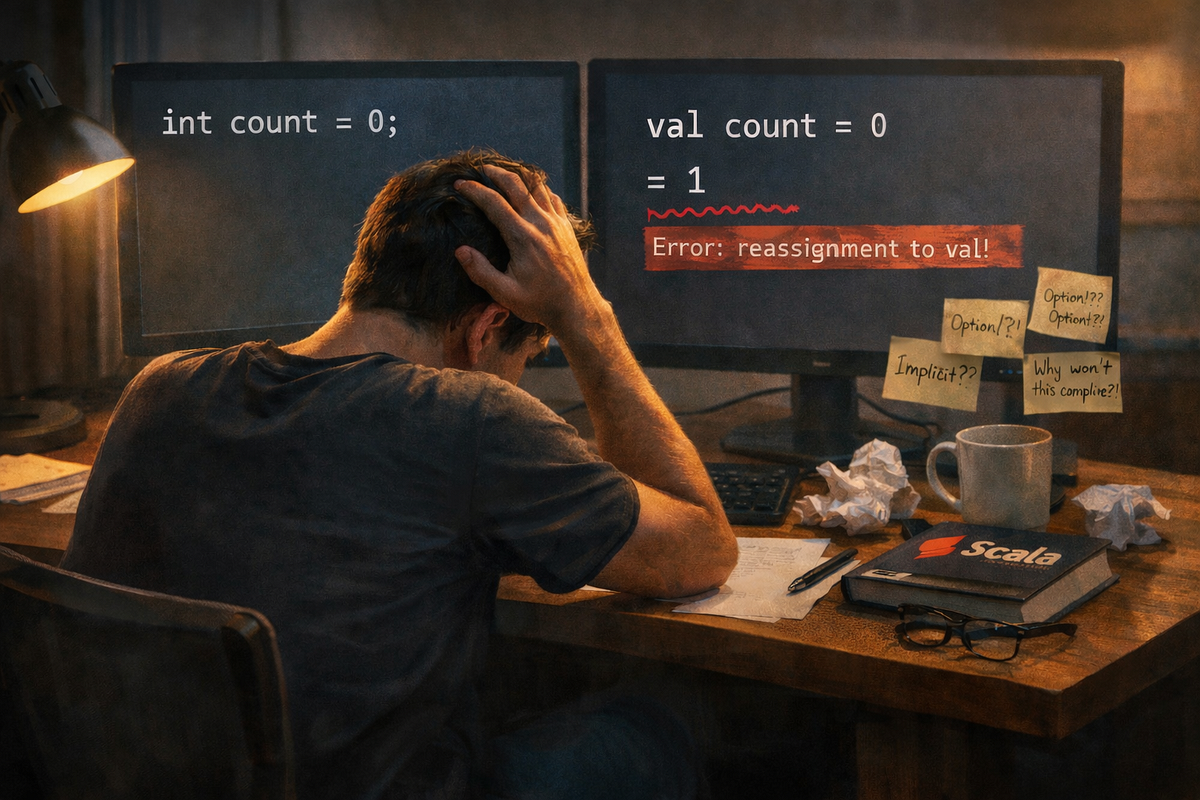
"The First Philosophical Shift: Immutability by Default // Scalaval count = 0count = 1 // Compiler error Scala forces you to ask: Do I really need mutation? Most of the time, the answer is no. Immutability makes reasoning trivial, safer for concurrency, and easier to refactor. Expressions Over Statements: No Return Needed // JavaString status(int code) { if (code == 200) return "OK"; else return "ERROR";} // Scaladef status(code: Int): String = if (code == 200) "OK" else "ERROR" Methods are expressions, not instructions."
Scala presents a different mental model on the JVM, favoring transformations over imperative loops and offering concise DSL-like syntax. Pattern matching replaces verbose switches and provides compiler-checked exhaustiveness. Values are immutable by default, forcing developers to reconsider mutation and enabling easier reasoning, safer concurrency, and simpler refactoring. Methods are expressions rather than statements, encouraging referential transparency and reducing temporary variables. Option types encode absence in APIs and eliminate hidden nulls, producing clearer intent and fewer runtime surprises. Recursive thinking replaces many iterative patterns, aligning code with functional principles and supporting more composable, predictable programs.
Read at Medium
Unable to calculate read time
Collection
[
|
...
]