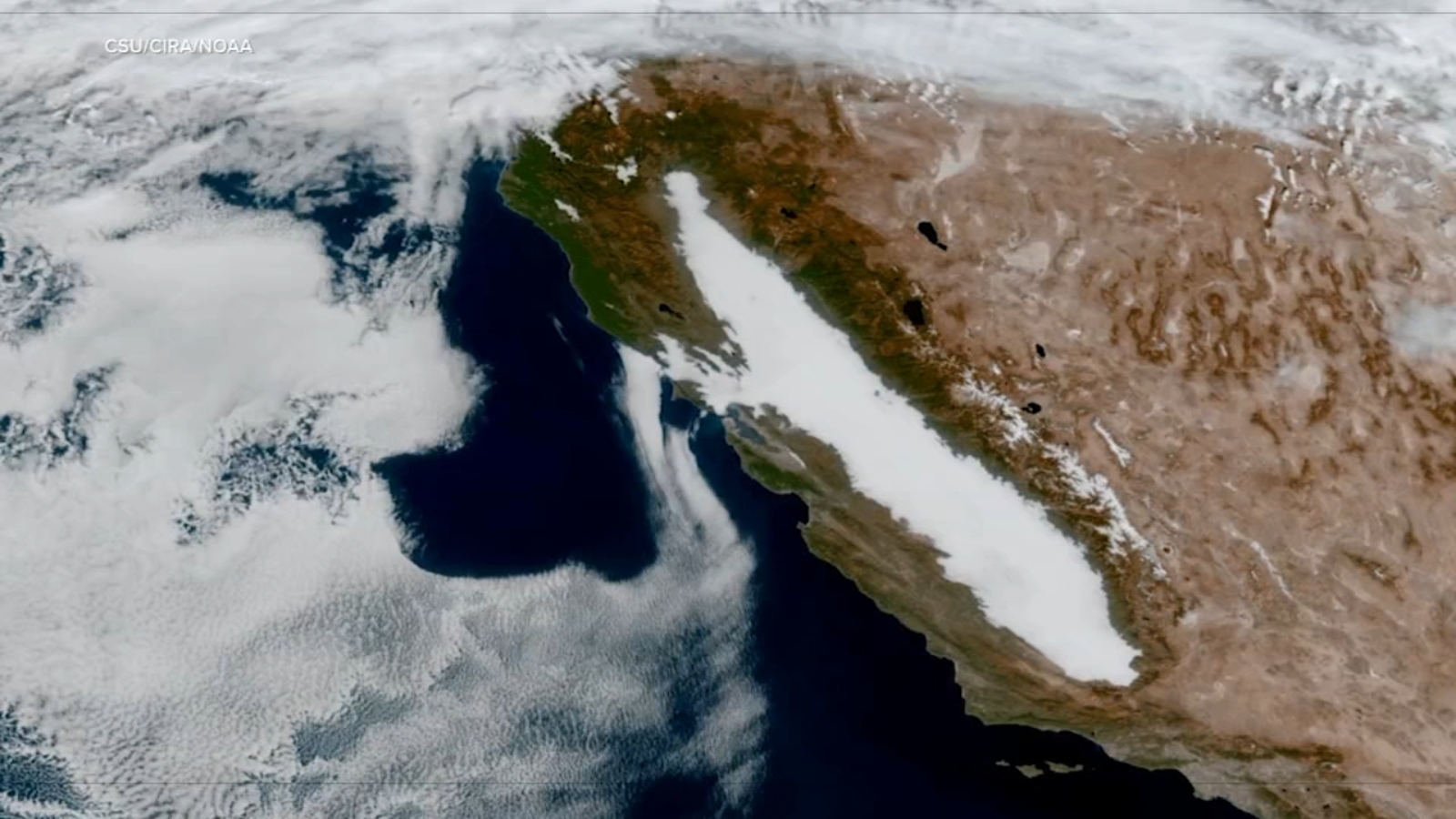
"High pressure centered off the California coast has created a resilient pattern of calm winds across the state. Combined with chilly winter air at night, it is the perfect recipe for what is known as Radiation Fog (the name comes from fog forming under radiational cooling). This is a very common weather phenomenon in the winter and it is also known as "tule fog" in California."
"When our winter air cools overnight to saturation, fog forms. The Central Valley acts like a bowl, trapping the fog while it looks for an exit. That exit is the Carquinez Strait, allowing the fog to stream into the Bay Area at an almost unlimited pace. The constant source of fog is having a chilling effect on our temperatures. For the first 10 days of December, average temperatures were more than three degrees below average in some cities."
High pressure centered off the California coast has produced a resilient pattern of calm winds across the state, promoting stagnant air. Calm winds combined with chilly nighttime winter air create radiational cooling that forms Radiation Fog, commonly called tule fog in California. Overnight cooling to saturation in the Central Valley causes fog formation, and the valley acts like a bowl that traps the fog. The Carquinez Strait provides an exit that allows fog to stream into the Bay Area. The persistent fog has chilled temperatures, with the first ten days of December averaging more than three degrees below normal in some cities.
#radiation-fog-tule-fog #bay-area-weather #high-pressure-coastal-ridge #carquinez-strait-fog-transport
Read at ABC7 San Francisco
Unable to calculate read time
Collection
[
|
...
]