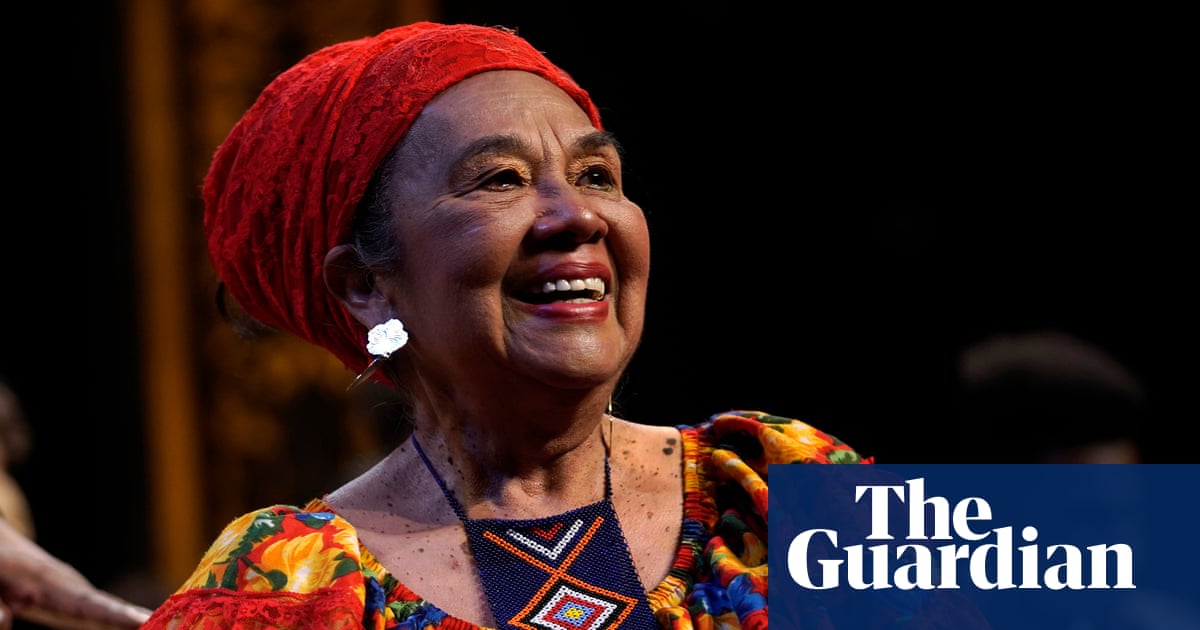
Toto la Momposina, born Sonia Bazanta Vides in 1940 in northern Colombia, became a celebrated musician known for carrying Colombian culture and memory globally. She performed Colombian folk styles including cumbia and porro, building a reputation that led to a 1974 residency at New York’s Radio City Music Hall. In 1979 she was blacklisted in Colombia for leftwing political leanings, became a refugee, and fled to France, where she joined a musical collective. She later recorded her debut album Cantadora in 1983 and gained wider international recognition through Real World Records. Her influence continued as younger Latin artists sampled her songs, and tributes came from figures including President Gustavo Petro.
"Her three children announced her death from a heart attack on Instagram. Toto was a woman who, with her voice and extraordinary dedication, carried the culture and memory of the Colombian people to the far corners of the world, they added. With a lilting voice charged with an edge of toughness, Toto took various forms of Colombian folk music, including cumbia and porro, to broader international awareness. And her popularity has been maintained, with younger generations of Latin artists sampling her songs."
"She was born Sonia Bazanta Vides in 1940 in the small town of Talaigua Nuevo in northern Colombia, to a family featuring multiple generations of musicians. After the family moved to Bogota, she took on the stage name Toto la Momposina, Toto being her childhood nickname and Momposina a reference to the Mompos region where she had been raised. By the late 1960s she was performing in her own band, Toto La Momposina y Sus Tambores, and her reputation in Colombia built to the point where she was invited to perform a concert residency at New York's Radio City Music Hall in 1974."
"But in 1979 she discovered she was blacklisted in Colombia for leftwing political leanings, and she became a refugee, fleeing to France and falling in with a musical collective there. I sang in the streets, in restaurants, on street corners, in markets, in the Metro, everywhere, she said. She joined the cultural delegation accompanying Gabriel Garcia Marquez as he accepted the Nobel prize for literature in 1982, and her recording career began the following year with debut album Cantadora."
"But it was through a partnership with Peter Gabriel's label Real World Records that she found a broader international audience, be"
Read at www.theguardian.com
Unable to calculate read time
Collection
[
|
...
]