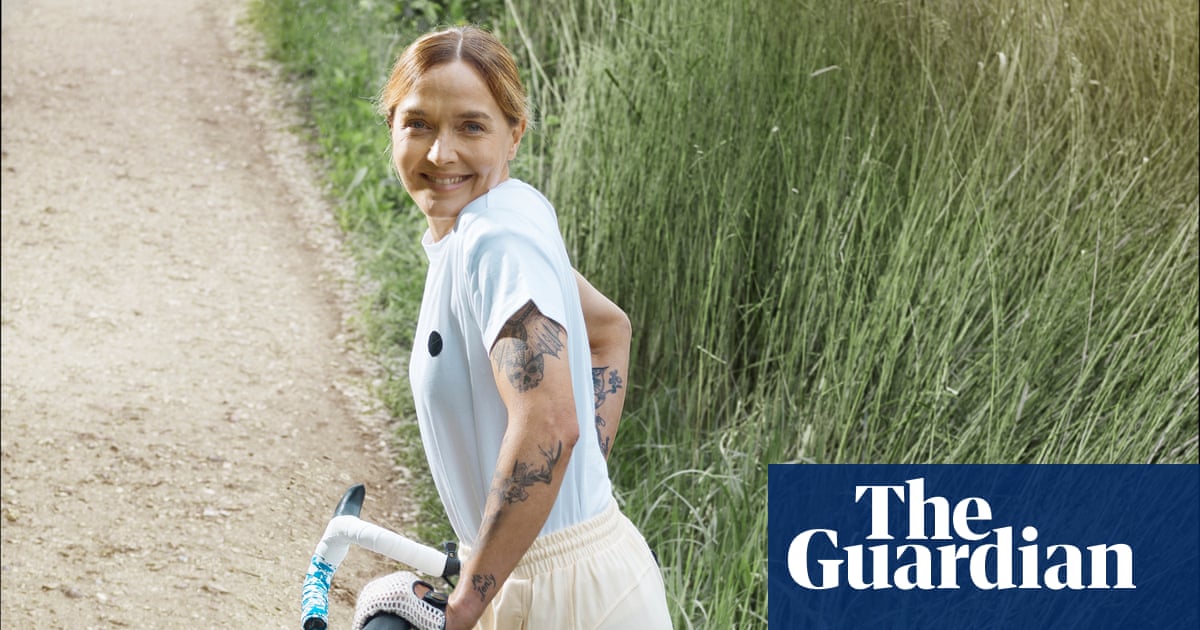
Victoria Pendleton, born in Bedfordshire in 1980, is one of Britain’s most decorated cyclists. She won nine world championship golds, a 2008 Olympic gold in sprint, a 2008 Olympic gold in keirin, and a 2012 Olympic silver in sprint. She retired from cycling in 2012 and became a jockey. Her book The Fear Opportunity is published on 21 May. She describes getting her first solo racing bike on a family holiday in southern France, secondhand and custom sprayed by her father. Her twin Alex had a similar bike, and their father treated cycling as therapy and community. They began on a tandem, then started grass track racing at nine. She recalls being raised in a gender-neutral way, but later noticing unfair limitations for girls in school sports.
"Born in Bedfordshire in 1980, cyclist Victoria Pendleton is one of Britain's most decorated athletes. As well as winning nine world championship golds, she won the gold medal in the sprint at the 2008 Olympics and the gold medal in the keirin (a sprint following a speed-controlled start), as well as a silver medal in the sprint in the 2012 Olympics. She retired from cycling in 2012 and is now a jockey. Her new book, The Fear Opportunity, is published on 21 May."
"This was taken when cycling was a hobby and nothing more. My family were on holiday in the south of France, not far from Saint-Tropez. That was my first solo racing bike it was secondhand and Dad got it custom sprayed. My twin, Alex, had one, too. We were very proud of them. My dad was in love with cycling and he wanted us to experience that refuge. It was his therapy and his community."
"We started on a tandem, but as soon as Alex and I were old enough to get our own bikes, aged nine, we started grass track racing. At this age, I was very shy and timid, but I was content because I had a nice upbringing. My parents raised me not as a little girl, but as a twinny. They gave Alex and me genderneutral gifts and Dad would take my brother cycling the same number of times as he would take me. I'm grateful, because it gave me a sense of capability, but I soon discovered things are not quite as fair in real life as they were at home."
"Nowhere was I more aware of the limitations of being a girl than in the school playground. It was segregated into boys' sports pitches, and the girls were pushed to the peripherals to avoid being hit by a football. I found break time boring. Girls weren't encouraged to pursue sports at all,"
Read at www.theguardian.com
Unable to calculate read time
Collection
[
|
...
]