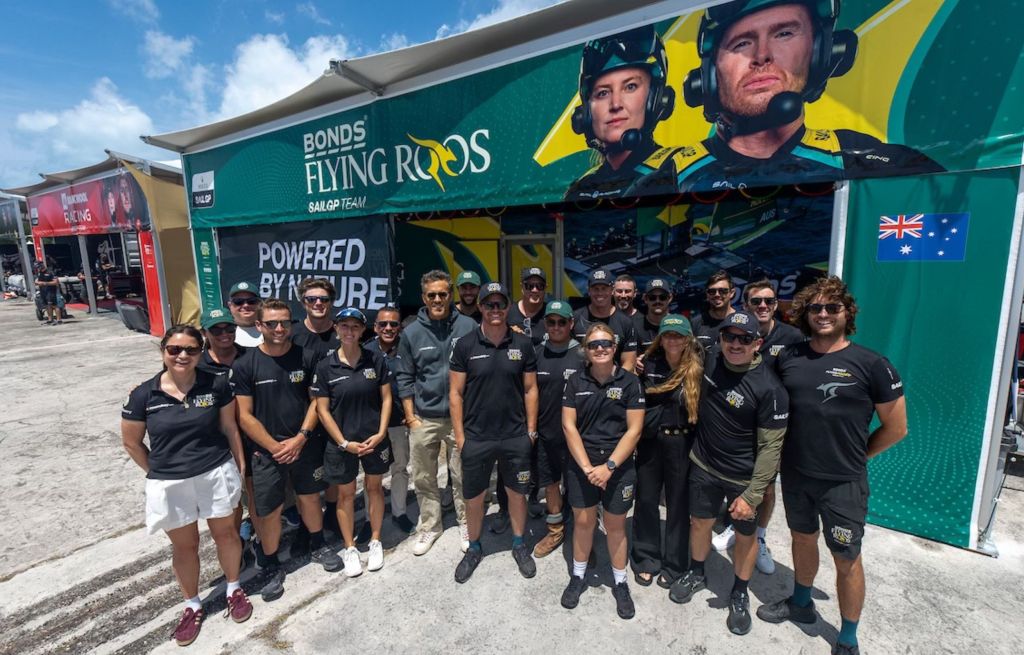
"“When we created SailGP, we wanted to be a traveling championship,” says COO Julien di Biase. “You really want the team and event in the same place, because then you get a super-engaged audience,” adds co-founder and sailing legend Russell Coutts. “Even if they don't know any of the sailing athletes, that's enough for a lot of folks.”"
"“That's the foundation on which we build all of our logistics,” Julien di Biase explains. “Where is the port for our vessels to arrive? Can we get to that venue based on the dates of the previous and next races? It's crucial to make sure that once we announce a race in a specific city on a specific date, we can deliver.”"
"Unlike sports such as golf, where established courses already exist at nearly every major resort, finding a suitable venue for a sailing race is complicated. Organizers need the right sea conditions - strong winds, flat water - but also a location that can host large crowds and offers views close enough that fans don't need a telescope to follow the action."
"Early on, SailGP had to beg cities to host events. Now, cities are often the ones making the pitch, with some even covering half the cost."
SailGP completes races only after a long logistical process begins well before the F50 catamarans reach the water. The first step is selecting a location that offers strong winds and flat water while also accommodating large crowds and providing close viewing for fans. A tech site and command center are established so analysts can track performance metrics and support crews from shore. Logistics planning depends on where vessels can arrive and whether travel to the venue fits the schedule between consecutive races. Cities that once had to be persuaded now often compete to host events, sometimes covering substantial costs to attract the championship.
Read at Entrepreneur
Unable to calculate read time
Collection
[
|
...
]