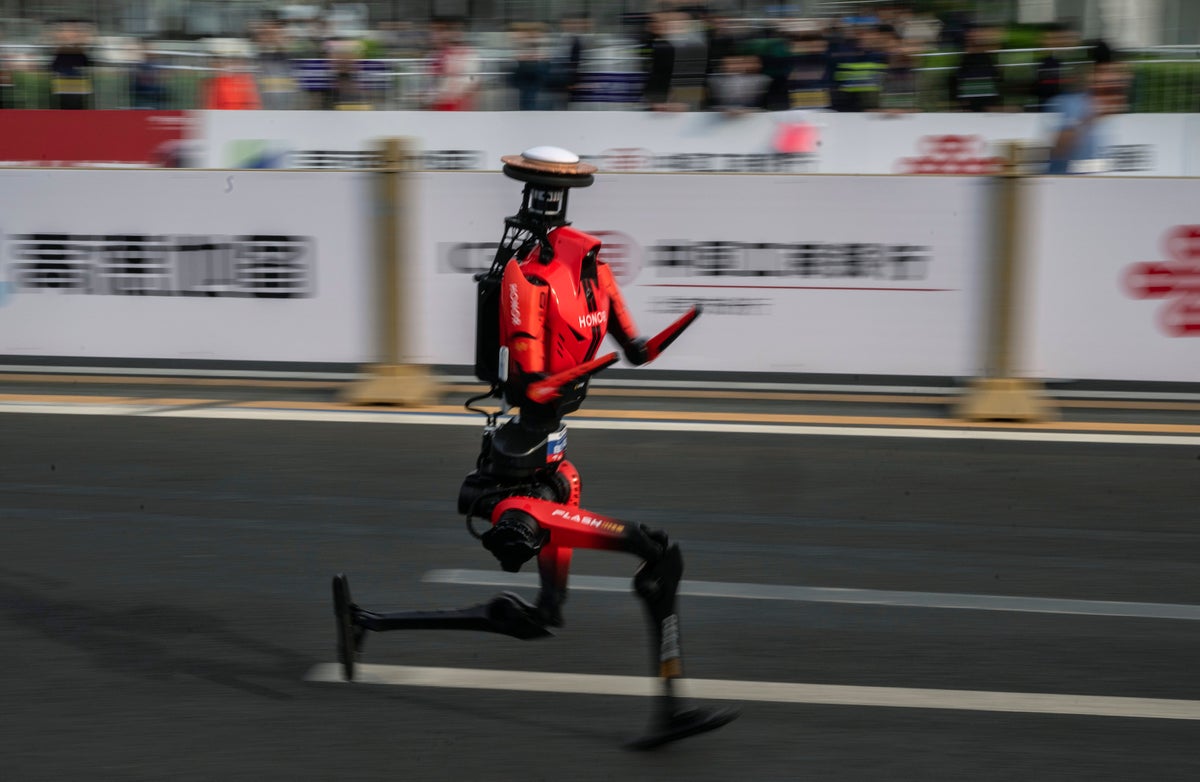
"The Lightning robot also crashed into a barricade, fell and waited for its handlers to set it upright. The Beijing race offered a vivid snapshot of where humanoid robotics stands."
"Engineers have gotten much better at building machines that can run long distances without overheating or breaking. Getting them to move through the real world with anything like human judgment is another matter."
"It's just a stupid publicity stunt, says Rodney Brooks, an emeritus professor at the Massachusetts Institute of Technology, who co-founded iRobot. He has spent decades watching robotics hype cycles come and go."
The Lightning robot finished the Beijing E-Town Half Marathon in 50 minutes and 26 seconds, surpassing the human world record. Its design features long legs modeled after elite runners and a cooling system adapted from smartphones. Despite its impressive time, the robot crashed and required assistance to continue. The event showcased advancements in humanoid robotics, with over 100 teams participating, yet only 38 percent of robots ran autonomously. Most robots were supported by crews and followed a rehearsed course, highlighting the gap between speed and real-world navigation capabilities.
Read at www.scientificamerican.com
Unable to calculate read time
Collection
[
|
...
]