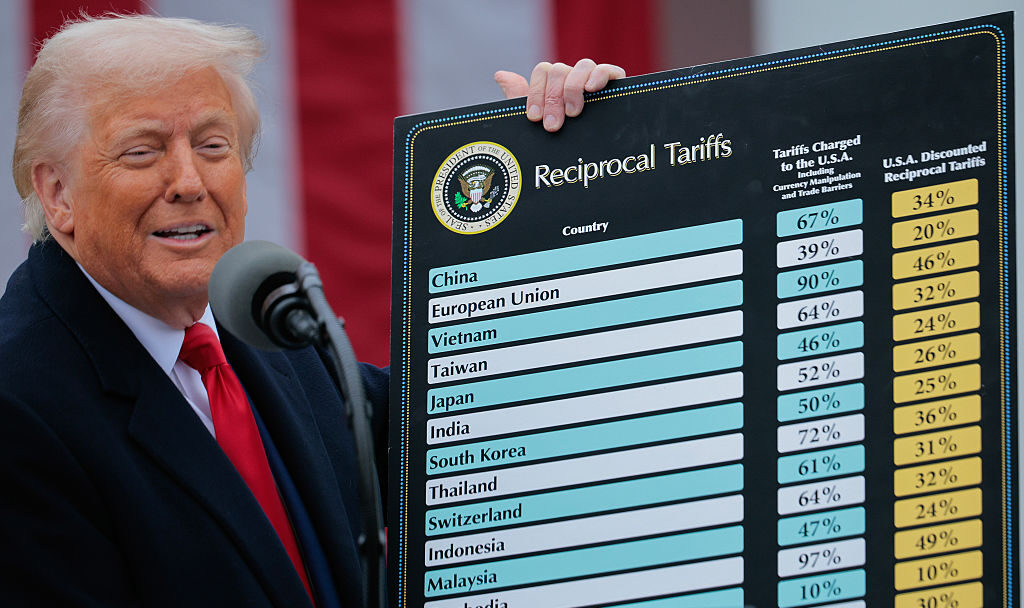
"A nation that is dependent upon foreign industry to produce the things that it needs is a nation that is in a state of permanent subservience. This is precisely the point that Alexander Hamilton made in his "Report on Manufactures" in 1791. Hamilton knew that a nation that did not develop its own industry would forever be in a subservient position to the more advanced industrial nations of Europe."
"In the 19th century, the United States had a set of tariffs that would be considered politically unrealistic in the modern age. Yet it was also a time in which the United States had the fastest industrial development in its entire history. American industry surpassed Great Britain's and became the largest industrial base in the world in the early years of the 20th century."
"America's founders knew that political freedom cannot exist without economic freedom. Tariffs have long been one of the tools that America uses to build and maintain its industrial strength. From the early days of the Republic until the start of the 20th century, tariffs were at the heart of America's economic policy."
American industrial workers question whether the nation remains committed to domestic manufacturing. Tariffs have been fundamental to U.S. economic policy from the Republic's founding through the early 20th century, serving as tools to build industrial strength. Alexander Hamilton's 1791 Report on Manufactures established that nations dependent on foreign industry face permanent subservience. Political freedom requires economic independence. The 19th-century United States implemented substantial tariffs while experiencing unprecedented industrial growth, surpassing Britain to become the world's largest industrial base by the early 1900s. This achievement resulted from deliberate policy, not accident.
#tariffs-and-trade-policy #american-industrial-manufacturing #economic-independence #historical-economic-development #domestic-industry-protection
Read at The American Conservative
Unable to calculate read time
Collection
[
|
...
]