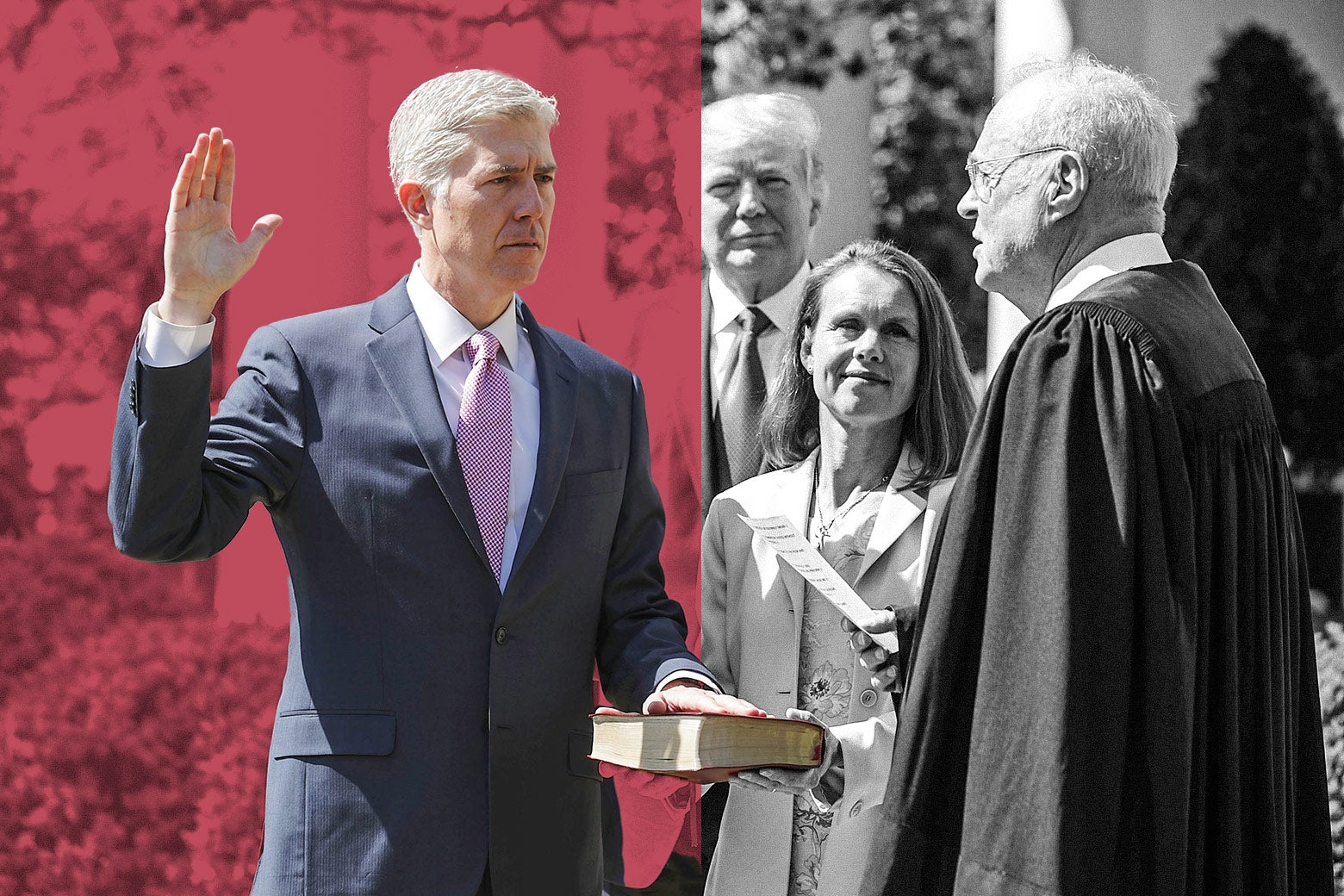
"When Justice Antonin Scalia died in February of 2016, the Supreme Court appeared to be headed for a 5-4 liberal majority. Instead, a staggering blockade by Senate Republicans and a shocking electoral upset helped steal a seat and clear the way for today's conservative supermajority."
"In our second episode, we examine Neil Gorsuch's politically fraught path to power and his time on the bench so far, including the unpredictability that has made him the high court's wild card."
"Want more Slow Burn? Join Slate Plus to binge every episode of Becoming Justice Gorsuch-and every season of Slow Burn, including Becoming Justice Thomas. You'll also enjoy ad-free listening to all of your favorite Slate podcasts. Visit slate.com/slowburnplus to get access wherever you listen."
Antonin Scalia’s death in February 2016 initially suggested a liberal majority at the Supreme Court. Senate Republicans blocked action on Merrick Garland’s nomination, preventing a seat from being filled in the expected way. An electoral upset then shifted control, enabling Neil Gorsuch to be appointed and helping establish a conservative supermajority. Gorsuch’s path to power was politically fraught, and his time on the bench has been marked by unpredictability. His decisions and judicial approach have made him a high court “wild card,” affecting how observers anticipate outcomes in future cases.
#us-supreme-court #neil-gorsuch #senate-confirmation-politics #merrick-garland #judicial-unpredictability
Read at Slate Magazine
Unable to calculate read time
Collection
[
|
...
]