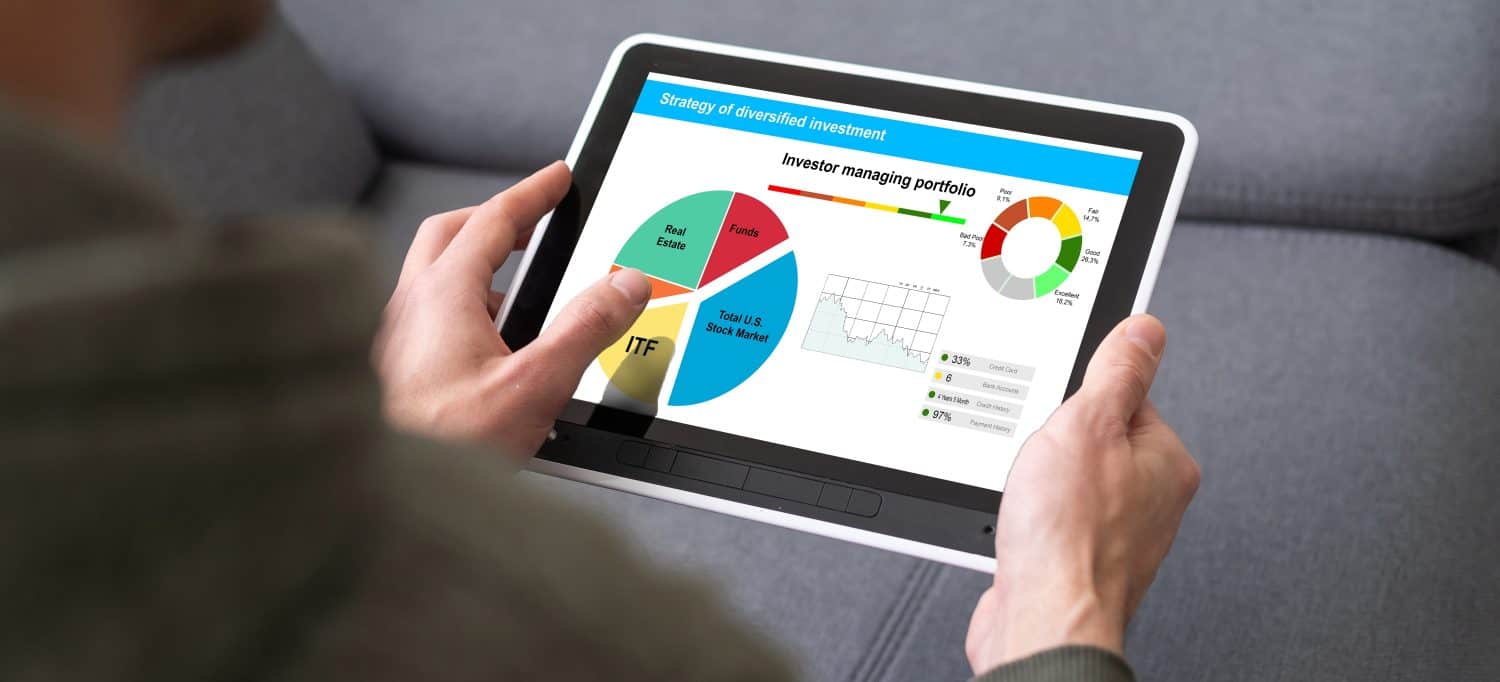
A high-income household with retirement accounts already maxed can reduce taxes by using direct indexing in a taxable brokerage account. Instead of holding an S&P 500 ETF, the investor holds many underlying index constituents in a separately managed account that tracks the index closely. Each individual lot becomes a tax asset, allowing specific losing positions to be sold to realize capital losses while keeping overall exposure to the index. Index-level performance can look strong even when major constituents decline, because ETF reporting nets gains and losses. In years with normal volatility, a large share of constituents can enter loss territory, enabling recurring harvested losses. For a $1.2 million portfolio, harvested losses can be roughly $30,000 to $50,000 per year.
"Direct indexing is how it gets done. Instead of owning the SPDR S&P 500 ETF ( NYSEARCA:SPY | SPY Price Prediction), the investor holds 150 to 250 of the underlying constituents in a separately managed account that mirrors the index within a tight tracking band. The fund wrapper goes away. Every individual lot becomes a tax asset."
"SPY is up almost 9% year to date and 26% over the past year. That headline conceals what is happening beneath it. Microsoft, the third-largest holding at 5% of the index, is down 16% YTD. JPMorgan Chase is off 6%. Bank of America has lost 9% as the 10Y-2Y spread compressed to roughly half a percent and the Fed funds upper bound settled near 4%."
"Inside SPY, those losses are invisible. The fund nets them against winners like NVIDIA up 21%, Exxon Mobil up 27%, and Apple up 10%, and reports one number. The direct-indexed portfolio reports 500. The losers can be sold to the IRS while the index exposure stays intact."
"In a normal-volatility year, 30% to 50% of S&P 500 names show losses at some point even when the index finishes flat or higher. The VIX spike to almost 31 in March 2026 is a recent example: a window that created harvestable losses across most rate-sensitive financials and a chunk of mega-cap tech, even though the index recovered. On a $1.2 million direct-indexed sleeve, that translates to roughly $30,000 to $50,000 of harvested losses per year. Call it $40,000."
Read at 24/7 Wall St.
Unable to calculate read time
Collection
[
|
...
]