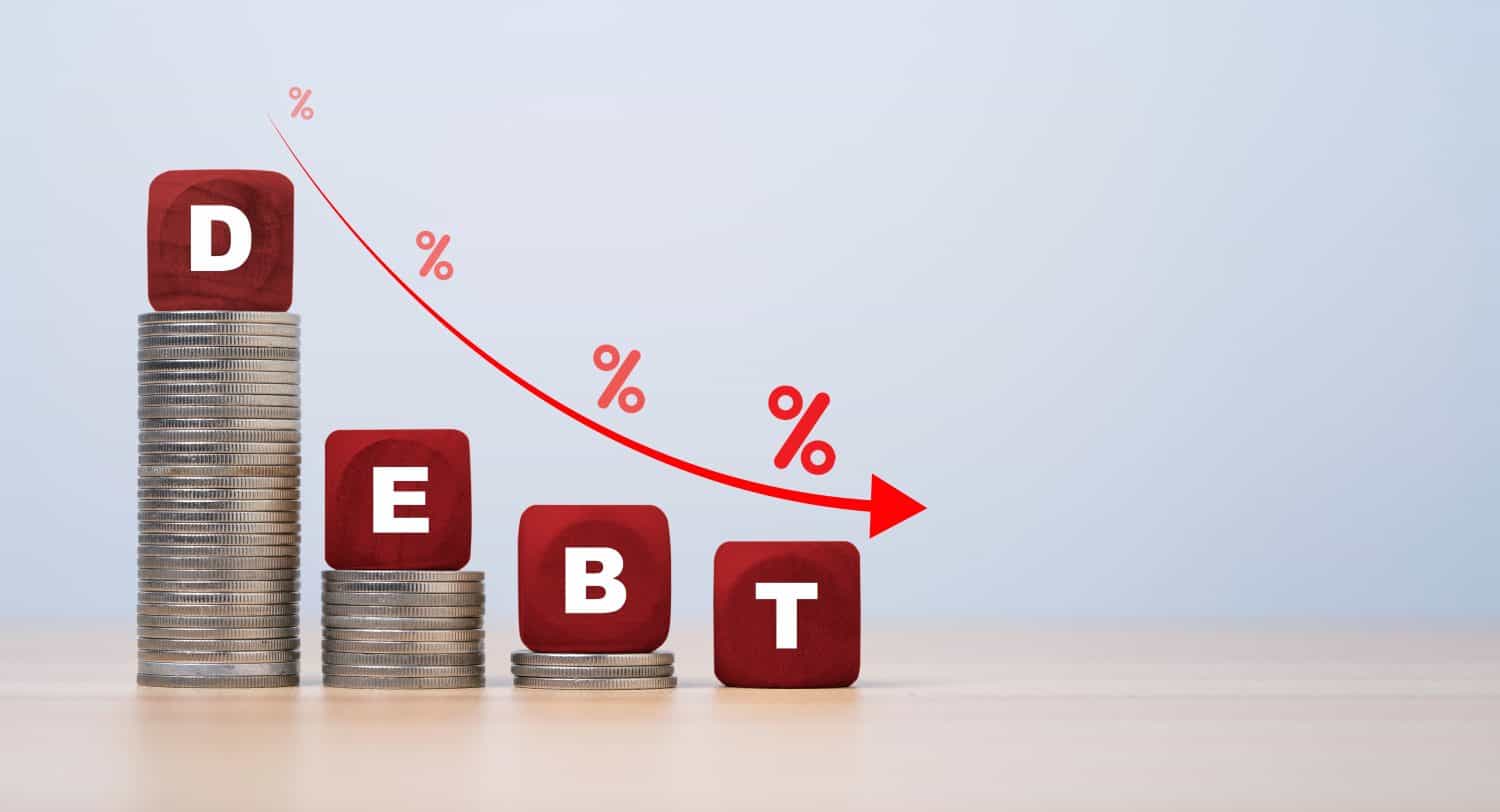
Oil prices have softened and war headlines have improved, yet long-term Treasury yields remain stubbornly high. The 30-year yield is around 5% and the 10-year yield is about 4.45%, with real yields also elevated and rising. The U.S. pays more for 30-year borrowing than Germany, Japan, and most of Europe, leaving only the UK higher. The main driver is growing sovereign debt, with a large portion of the national debt maturing soon. Roughly one-third of the $39.3 trillion debt matures within a year, requiring $12 trillion to $13 trillion to be rolled while also funding about $3 trillion in new borrowing for the deficit. Foreign demand is described as shrinking.
"It's the debt. Strip away the geopolitics, strip away the energy narrative, and what is left is a sovereign borrower asking creditors to fund an ever-larger pile at a price those creditors increasingly reject."
"As of May 27, 2026, the 10-year yield closed at 4.445% and the 30-year at 4.975%, with the 30-year touching 5.18% on May 19. Real yields tell the same story without the inflation noise. The 30-year TIPS yield is 2.72%, with the 10-year real yield at 2.09%, both elevated and rising through the month."
"The United States now pays more to borrow for 30 years than Germany, Japan, and most of Europe. Only the UK is higher, and he expects American yields to overtake British gilts soon enough. For a reserve-currency issuer, that is an awkward position. A country whose bonds are the global risk-free benchmark is now being priced as a worse credit than economies with slower growth, older populations, and fewer structural advantages Washington usually invokes."
"Then there is the supply problem. Schiff notes that roughly one-third of the $39.3 trillion national debt matures within the next year, meaning $12 trillion to $13 trillion has to be rolled, on top of roughly $3 trillion in new borrowing to cover the deficit. That is a staggering amount of paper to place into a market where foreign demand is shrinking. Foreigners don't want to lend us money anymore, and they know that we're going to print money,"
Read at 24/7 Wall St.
Unable to calculate read time
Collection
[
|
...
]