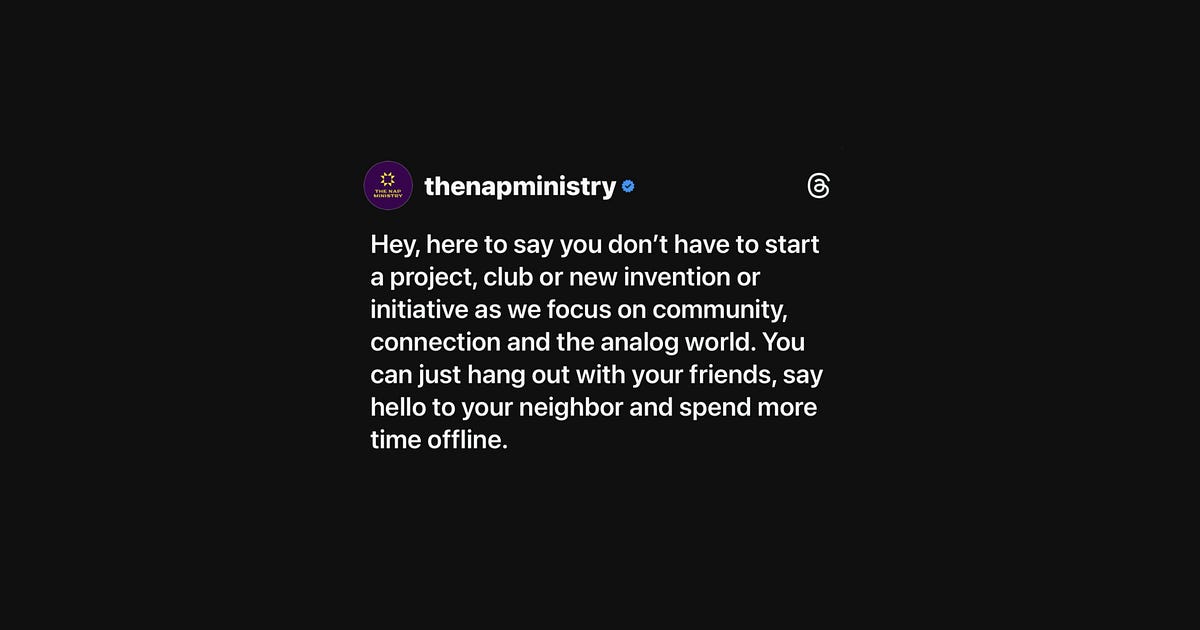
Excessive design and perfectionism can stall community formation by turning action into endless planning and polishing. Overemphasis on branding, schedules, and ideal structures delays gatherings until they feel complete, reducing opportunities for spontaneous interaction. Community more often arises from proximity, repetition, and ordinary presence than from curated programming. Iteration is valuable, but iteration can become procrastination when planning replaces doing. Allowing space for unpredictability and simple invitations like asking someone for coffee fosters connection more reliably than elaborate initiatives. Design can enhance experiences, but restraint preserves the natural rhythms that let relationships form.
"As much as curated spaces, planned interactions, crafted products, and intentional takeaways can enhance experiences and deepen connection, could too much design also stand in the way of us building and engaging in real communities? What really happens when we overly design our communities? When we overly design, planning halts action. Planning the perfect event or building the perfect structure can feel productive, but it often becomes a stall."
"We often say that design is about iteration, but in practice, the planning and polishing can take over. The more we perfect something, the further we drift from the natural rhythms that actually allow community to form. Real connection needs space to unfold in ways we can't predict. We don't know what will happen - and that's the point. Community doesn't usually grow from perfection."
Read at Medium
Unable to calculate read time
Collection
[
|
...
]