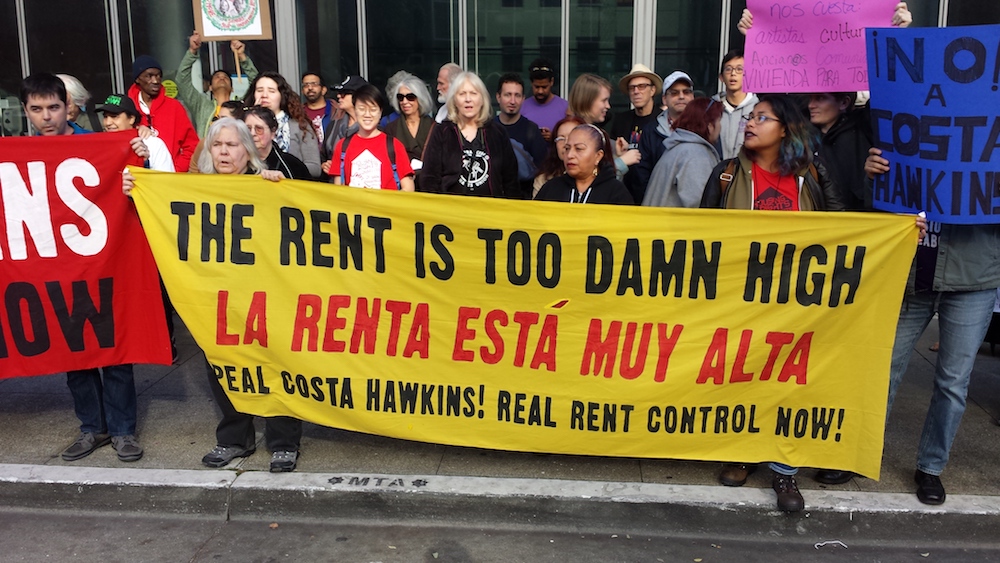
"San Francisco is one of the cities the authors use as a case study, and their mathematical simulation suggests that is could take up to 100 years of increasing housing supply at levels that are unrealistic at best to see rents fall to the level where a worker without an advanced degree could afford. "The simulation makes clear it is unrealistic to think that we can deregulate and build our way out of the affordability crisis with market-rate housing, even with large positive supply shocks, in any reasonable time frame," the study states."
"Under the right circumstances, well designed and executed upzoning may also reduce carbon emissions and improve urban amenities. But ironically, if these goals are achieved, increased access to jobs and amenities will make those same locations more expensive; they will not make desirable locations affordable to households facing onerous cost-burdens, and may in fact worsen their outcomes if policies are not sufficiently context-sensitive. Hence, while upzoning may be desirable from the standpoint of some policy objectives, it is not a robust tool to increase affordability"
Economic inequality is the primary driver of the U.S. housing affordability crisis rather than zoning restrictions or construction constraints. Simulations using major-city examples such as San Francisco indicate that even sustained, large increases in market-rate housing supply could take decades or a century to lower rents to levels affordable for workers without advanced degrees. Deregulation and upzoning can increase housing quantity and reduce commutes and carbon emissions, but they can also accelerate gentrification and displacement and raise prices in desirable areas. Upzoning is not a reliable, standalone solution to improve affordability without complementary, targeted policies.
Read at 48 hills
Unable to calculate read time
Collection
[
|
...
]