"The home is part of a block-long row of two-story brick houses developed by William M. Calder. A U.S. senator and prolific builder, Calder put up so many homes in Windsor Terrace that the neighborhood, a "happy, thriving community of homeowners," according to the Brooklyn Daily Eagle in 1912, was known as Calderville. He filed plans for this single-family row house designed by Eisenla and Carlson in 1914. The houses were advertised in 1915 as "artistically decorated" with hardwood trim, parquet floors, gas ranges, built-in ice boxes, and laundry in the basement. As pictured in the ads, they included ornamental parapets and open front porches."
"That main floor includes front and middle parlors, a dining room, and eat-in kitchen. Tucked into a corner of the kitchen is a toilet room, sans sink. Upstairs are four bedrooms and one full bath. The basement, which is not shown in the listing photos, is described as having "untapped potential" that could become a rec room or office."
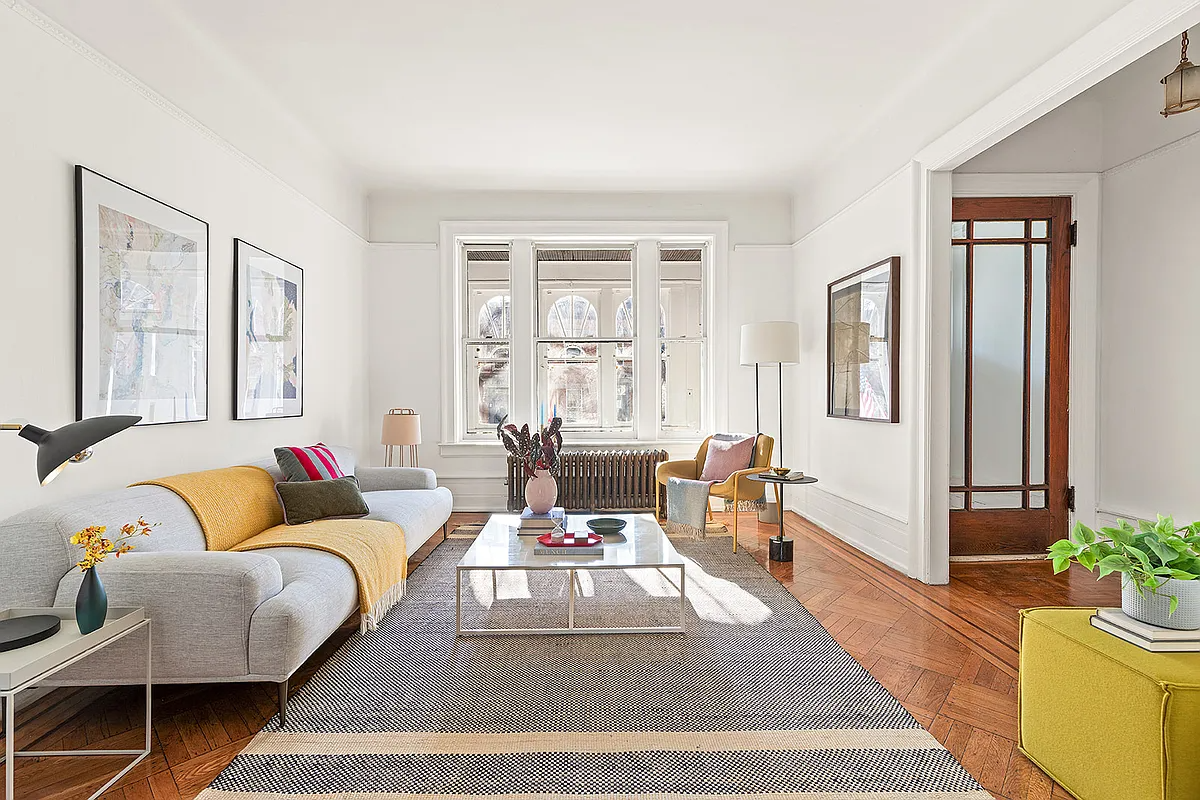
"The enclosed porch has a tile floor, but wood floors stretch through the front and middle parlors and the dining room. Walls and trim are white and include picture rails. The middle parlor includes the original stair, built-in storage, and pocket doors to the dining room."
209 Windsor Place is a single-family, four-bedroom row house steps from Prospect Park that retains early 20th-century details such as wood floors, picture rails, and stained glass. The block is part of houses developed by William M. Calder, with plans filed in 1914 and features originally advertised like hardwood trim, parquet floors, and built-in ice boxes. Many porches, including No. 209's, were enclosed by the late 1930s, adding main-floor living space. The main floor has front and middle parlors, a dining room, and an eat-in kitchen with a corner toilet room. Upstairs are four bedrooms and one full bath, while the basement offers untapped potential for a rec room or office.
Read at Brownstoner
Unable to calculate read time
Collection
[
|
...
]