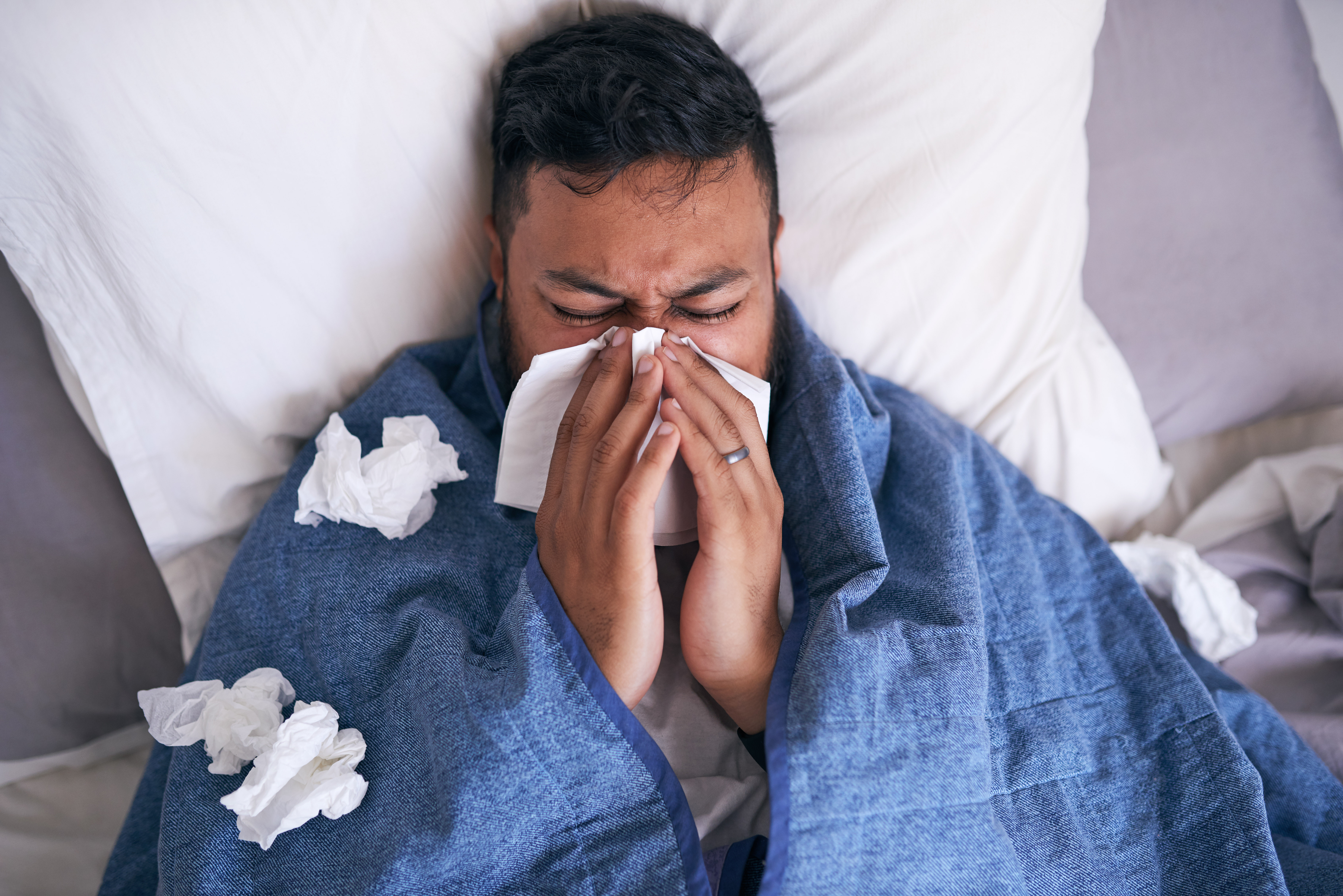
"Part of the problem may be a new virus strain called subclade K, which has "antigenic differences" from strains used in this year's vaccine, says Yonatan Grad, professor of immunology and infectious diseases at the Harvard T.H. Chan School of Public Health and the director of the Center for Communicable Disease Dynamics. In the following interview edited for clarity and length, Grad explains why some flu seasons are nastier than others and what we can do to stay safe."
"Why are some flu seasons worse than others? The variation in incidence is a function of a couple of things. The first is how much of the population is susceptible to the circulating strain of influenza virus. Immune protection comes from both past infection and vaccination, but both can wane with time and offer less protection as the virus evolves antigenically."
""Usually, one influenza A subtype dominates in a season, with influenza B circulating as well. This year, H3N2 is dominating." Yonatan Grad"
The U.S. is experiencing its worst flu season in 25 years, with at least 15 million illnesses, 180,000 hospitalizations and 7,400 deaths as of Jan. 3. A new virus subclade called K shows antigenic differences from strains used in this season's vaccine, which may reduce vaccine effectiveness. Population susceptibility depends on prior infection and vaccination, both of which can wane over time as the virus evolves. Human behavior and levels of interaction also influence transmission, as seen when COVID-19 lockdowns suppressed influenza spread. Influenza A (notably H3N2 this year) and influenza B are the main circulating classes.
Read at Harvard Gazette
Unable to calculate read time
Collection
[
|
...
]