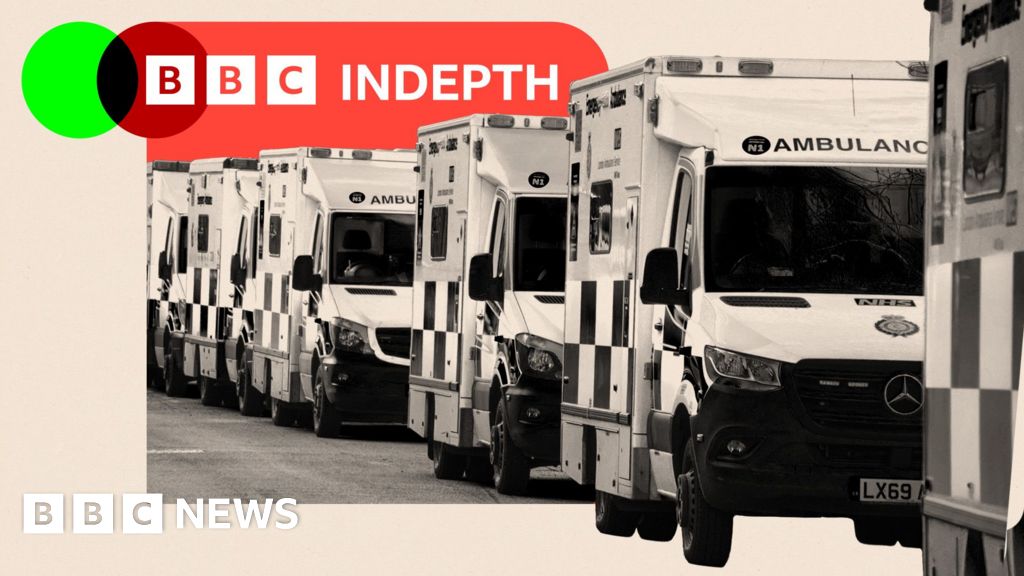
"As ambulances queued in front of Royal Berkshire Hospital in Reading last week, corridors full of patients were waiting for a bed on a ward. Emergency department consultant Omar Nafousi was at his wit's end. "We've no space," he told the BBC last week. "This is not what I signed up for when I became a doctor." It is a scene that is being repeated in hospitals up and down the country as winter viruses and cold weather add to the pressures on the health service."
"Every day there are more than 13,000 people whose treatment has been completed who are still in hospitals in England, the latest figures from NHS England suggest. Plus there are a further 4,000 around the rest of the UK - which means around one in eight beds are occupied by people who don't necessarily need to be there. Many of these "delayed discharge" patients are older and may be frail and living with multiple health conditions who need support in the community."
"The average hospital bed takes 562 a day to staff and maintain, according to NHS England, meaning the health service in England is losing more than 225m a month supporting patients who could be elsewhere. Then there is the cost to other patients. "We are seeing surgery cancelled and long waits in A&E because there are no beds available on the wards," says Clifford Kilgore, a senior nurse working with older people, who serves on the Nurses and Allied Health Professionals' Council of the British Geriatrics Society."
Ambulances are queuing outside hospitals and wards are full, with emergency staff unable to find beds for incoming patients. Winter viruses and cold weather are amplifying pressures on the system. Nearly 4,000 beds in England are occupied by patients with flu, Covid and norovirus, while more than 13,000 people whose treatment is complete remain in hospital each day. Around 4,000 additional delayed-discharge patients occupy beds elsewhere in the UK, meaning about one in eight beds are taken by people who no longer require inpatient care. Many delayed-discharge patients are older, frail, and need community support, driving staffing and financial strain and causing cancelled surgeries and long A&E waits.
Read at www.bbc.com
Unable to calculate read time
Collection
[
|
...
]