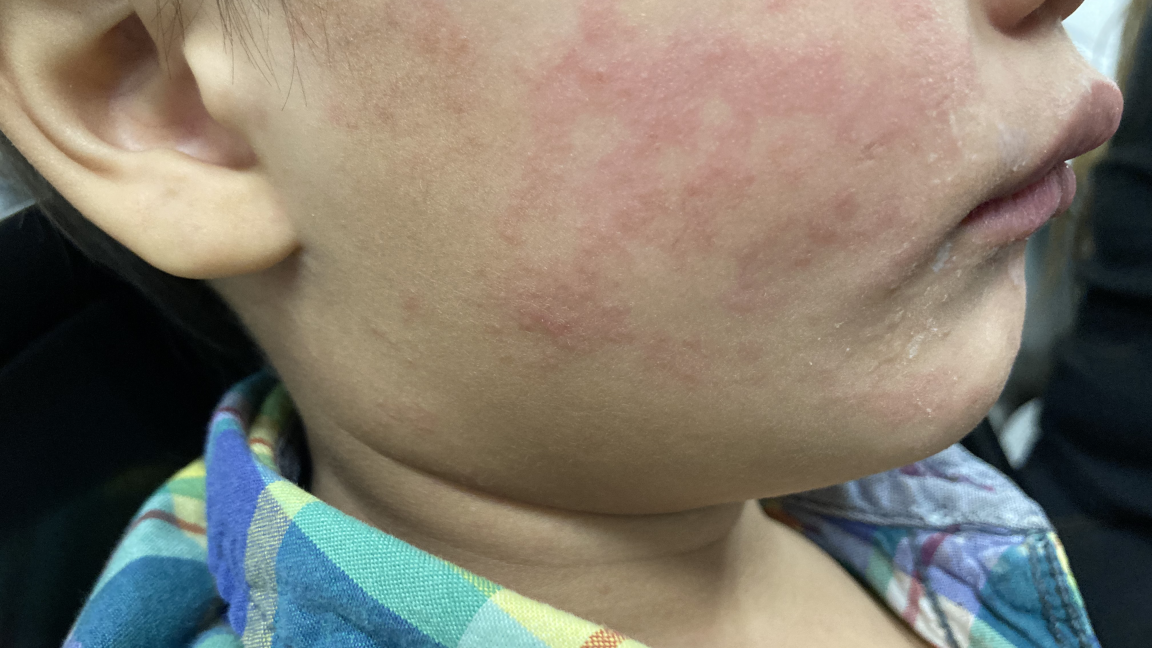
"The disease usually develops seven to 14 days after an exposure, but it can take up to 21 days (which is the length of quarantine). Once it develops, it's marked by a high fever and a telltale rash that starts on the head and spreads downward. People are contagious for four days before the rash develops and four days after it appears."
"Complications can range from ear infections and diarrhea to encephalitis (swelling of the brain), pneumonia, death in up to 3 out of 1,000 children, and, in very rare cases, a fatal neurological condition that can develop seven to 10 years after the acute infection (subacute sclerosing pan encephalitis). Two doses of the measles, mumps, and rubella (MMR) vaccine is considered 97 percent effective against the virus, and that protection is considered lifelong."
Measles typically appears seven to 14 days after exposure, sometimes up to 21 days, and begins with high fever followed by a rash that starts on the head and spreads downward. Infected individuals are contagious four days before the rash and four days after its appearance. Complications include ear infections, diarrhea, encephalitis, pneumonia, death in up to 3 per 1,000 children, and the rare progressive neurological disorder subacute sclerosing pan encephalitis that can emerge years later. Two doses of MMR vaccine provide about 97 percent lifelong protection. Recent outbreaks have produced hundreds of cases, mostly among unvaccinated or undervaccinated people, jeopardizing measles elimination status.
Read at Ars Technica
Unable to calculate read time
Collection
[
|
...
]