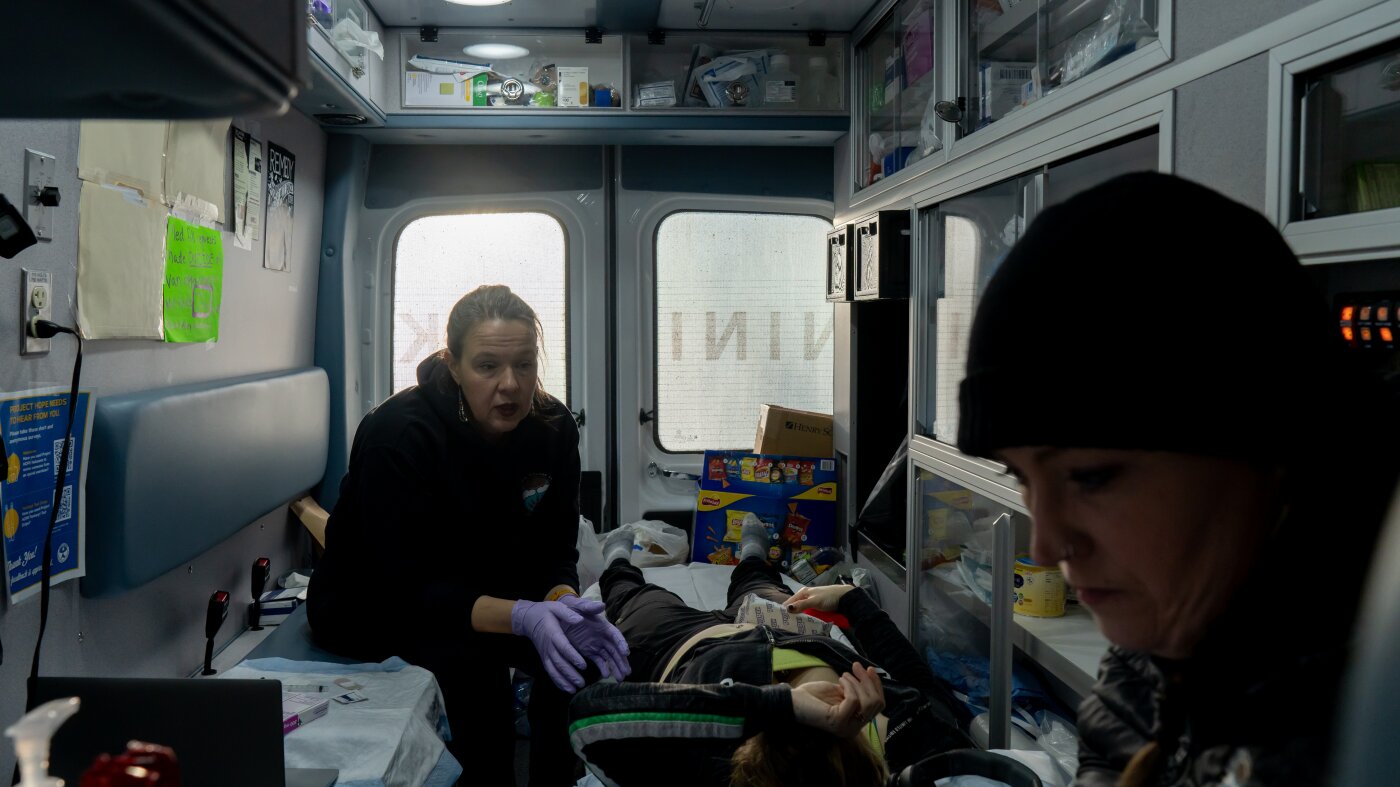
"The Alaska Department of Corrections does not provide comprehensive access to this life saving medication. "I'm gonna give you a little pinch," Spencer said, sliding the needle into a fold of skin on the patient's belly for the subcutaneous injection. Alaska's not an outlier. Despite the fact that those recently released from incarceration are some of the most vulnerable to dying from drug overdose, addiction experts say that many jails and prisons around the country don't provide medication treatment."
""I really wanted to do good" Spencer's patient at the clinic that day in August was a woman who asked that NPR use only her first initial, H., because she criticized the Alaska Department of Corrections and she was afraid of retaliation from staff in jail. She said she was expecting to be incarcerated for about 6 months. H. said there are sometimes contraband drugs in jail, and she wanted to get these shots so she had the best chance of staying sober while incarcerated."
At a rural clinic on Alaska's Kenai Peninsula, a clinician administered a buprenorphine shot to a patient preparing for incarceration. The Alaska Department of Corrections does not provide comprehensive access to buprenorphine and other life-saving medications. Many jails and prisons nationwide likewise limit or do not provide medication treatment for opioid use disorder. Community clinics try to treat people before and after incarceration but cannot provide care inside facilities. Interruptions in medication increase difficulty of recovery and risk of overdose. A patient expecting six months in jail sought shots to reduce relapse risk, citing contraband drugs inside facilities.
Read at www.npr.org
Unable to calculate read time
Collection
[
|
...
]