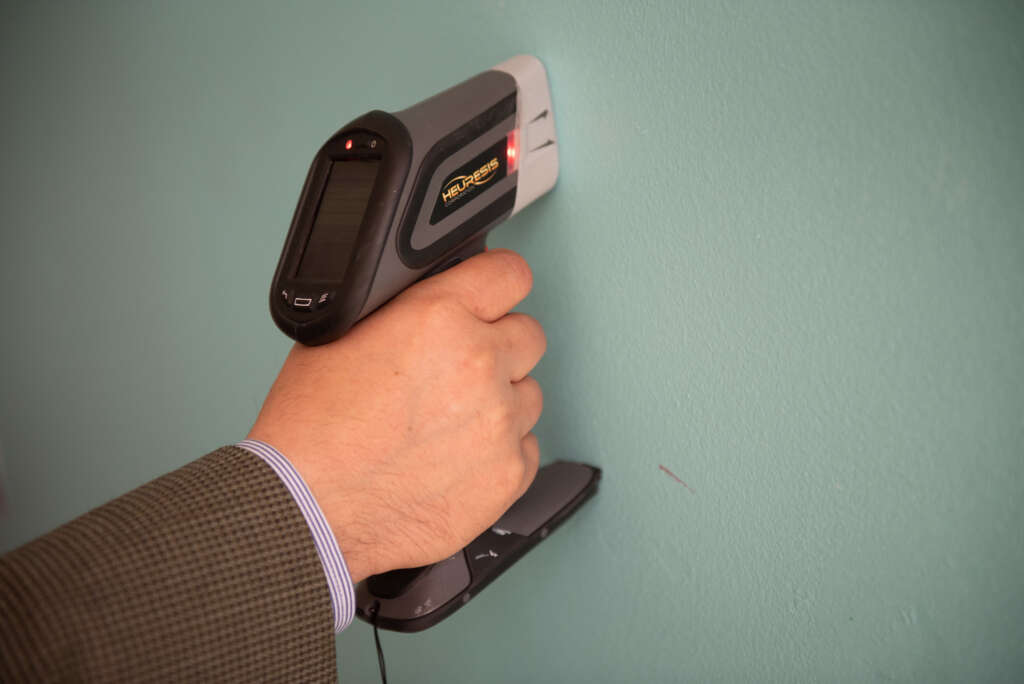
""Education around lead, and especially lead paint hazards, is something that still is really necessary," said Kielbasa. "People think of it as something that's been dealt with already, and there's still about 5,000 kids a year who are poisoned in New York City. And we're finding out more and more every day about how it's bad for adult health, and that's not really being tracked, honestly.""
"The information is definitely intended to be a starting point. And you know the truth is, is that even buildings that are supposed to not have any lead paint in them that were built after 1960 turn up after being tested to have lead paint in them, because the national band was 1978 and New York State, I believe, was 1970 even so, oh, wow, yeah."
""friction surfaces" - window and door frames even though, in many cases, if you have an old property where the paint is kept up, the friction surfaces are particularly dangerous, because over time that the abrasion that happens between the door and the door frame wear down the paint, and you can then expose the under layers of paint and cre"
New York City buildings constructed before 1960 are presumed to contain lead paint, and only proper testing can confirm its presence. A publicly accessible lookup allows users to enter an address to see a property's construction year as an initial risk indicator. Lead paint still appears in some buildings built after formal bans due to leftover stock and contractors' practices. Approximately 5,000 children per year in the city suffer lead poisoning. Adult health effects are increasingly recognized but under-tracked. Older buildings and layered paint increase risk. Friction surfaces such as window and door frames pose particular danger because abrasion can expose underlying lead paint layers.
Read at City Limits
Unable to calculate read time
Collection
[
|
...
]