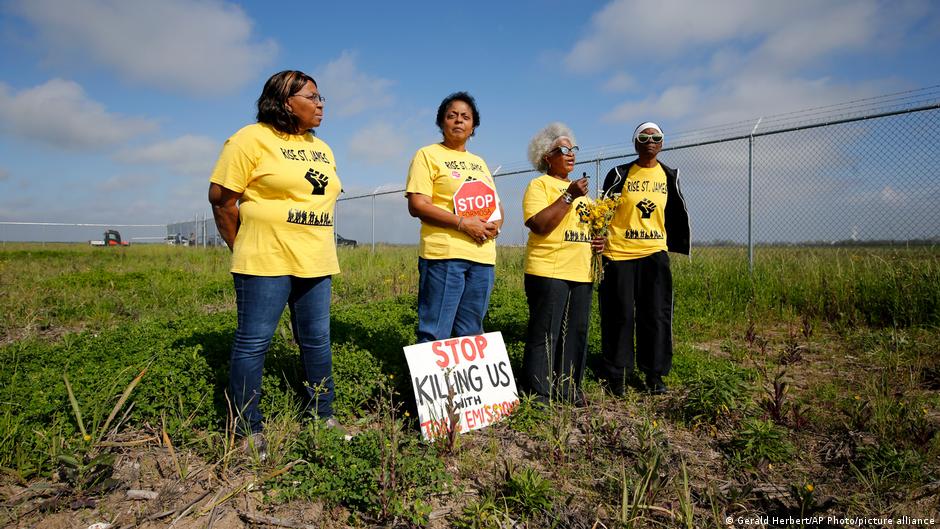
"One of the first giveaways is the smell, says Shamell Lavigne of how to recognize that the area she grew up in is steeped in "filth." She was raised in the heart of what has become known as 'Cancer Alley,' an 85-mile-stretch between Baton Rouge and New Orleans where around 200 fossil fuel and petrochemical plants are clustered along the banks of the mighty Mississippi River."
"For decades, 'Cancer Alley' facilities have been releasing a variety of toxic pollutants into the surrounding soil, water and air and local communities say they are paying a heavy price for the mountains of plastic the world produces. Simultaneously, the area has long ranked in the top 5% nationally for cancer risk. Though recent research from Johns Hopkins University in the US suggests the overall cancer threat is as many as 11 times higher than government estimates."
""I would describe it as a sacrifice zone," said Lavigne, who is now an environmental activist. "We have become the sacrificial lamb for the rest of the world to have single-use plastics." The US is among several countries including China, South Africa, Brazil, Iran and Saudi Arabia expanding their petrochemical capacity as projections point towards ever greater plastic production. Cancer, respiratory illness and infertility"
An 85-mile stretch between Baton Rouge and New Orleans hosts roughly 200 fossil fuel and petrochemical plants clustered along the Mississippi River. The region handles about a quarter of US petrochemical production, supplying chemicals, fertilizers and plastics. Long-term releases of toxic pollutants have contaminated soil, water and air and coincided with top 5% national cancer risk levels. Recent Johns Hopkins research estimates the cancer threat may be up to eleven times higher than government figures. Local residents report widespread cancer, respiratory illness and infertility and describe the area as a sacrifice zone bearing the costs of global plastic demand.
Read at www.dw.com
Unable to calculate read time
Collection
[
|
...
]