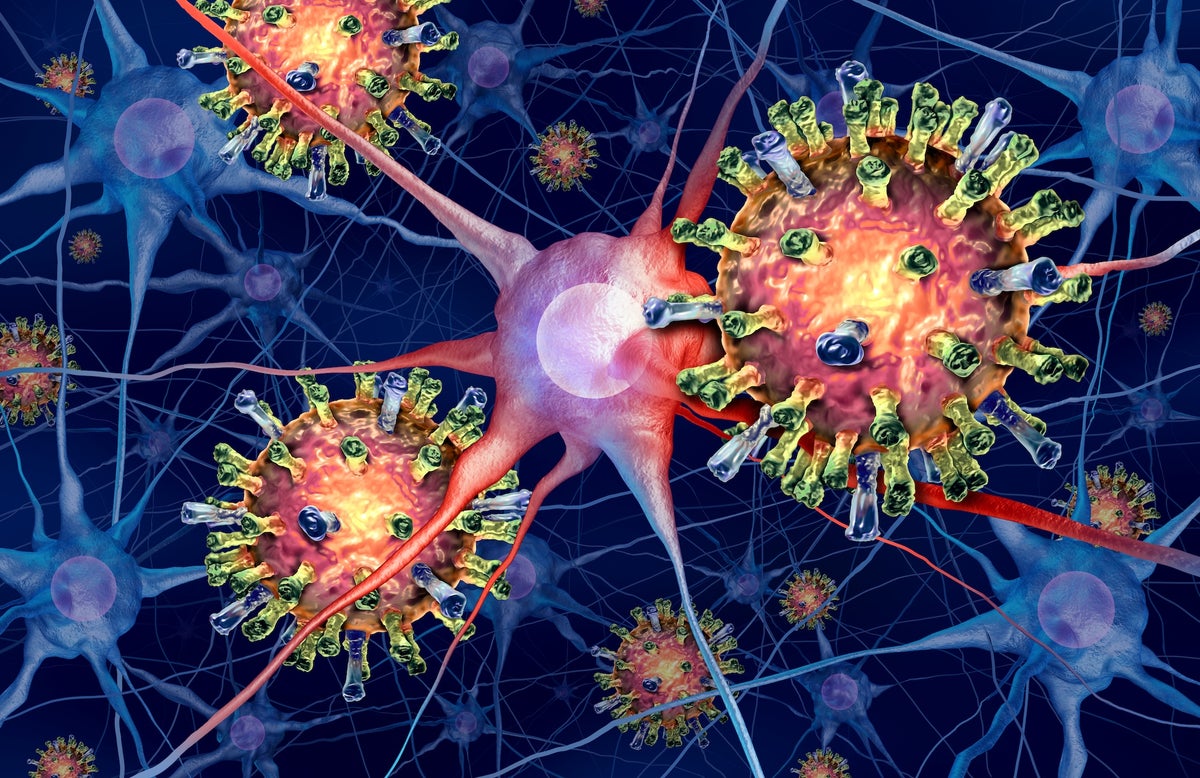
"A straightforward case of measles is nastybut the disease's complications are even worse. One of those complications has been confirmed in the ongoing, record-breaking measles outbreak in South Carolina: encephalitis, or brain swelling. South Carolina state epidemiologist Linda Bell confirmed the complication was occurring there during a media briefing on February 4, according to Wired. Bell did not specify the number of people who were affected or how serious their cases were."
"Bell did not specify the number of people who were affected or how serious their cases were. Encephalitis occurs in about one of every 1,000 measles cases and kills about one in five people who develop it. The complication is not well understood but appears to be the result of the virus prompting the immune system to attack a certain protein that some brain cells produce."
"As of February 3, South Carolina had reported 876 cases of measles related to the outbreak in its upstate region. Most of those cases are in children who were not vaccinated against the disease. Since January 2025, nearly 3,000 people have been reported as infected with measles in the U.S., according to Johns Hopkins University's independent tracking. The 2,267 cases that occurred in the U.S. last year represent the nation's highest annual total since 1991."
Encephalitis, or brain swelling, has been confirmed in the South Carolina measles outbreak, with state epidemiologist Linda Bell reporting its occurrence during a February 4 media briefing. Bell did not specify numbers or case severity. Encephalitis occurs in about one of every 1,000 measles infections and kills about one in five people who develop it. The complication appears to result from the virus prompting the immune system to attack a protein produced by some brain cells. As of February 3, South Carolina reported 876 outbreak-related cases, mostly in unvaccinated children. Nearly 3,000 U.S. measles infections have been reported since January 2025, threatening the nation's 25-year elimination status.
Read at www.scientificamerican.com
Unable to calculate read time
Collection
[
|
...
]