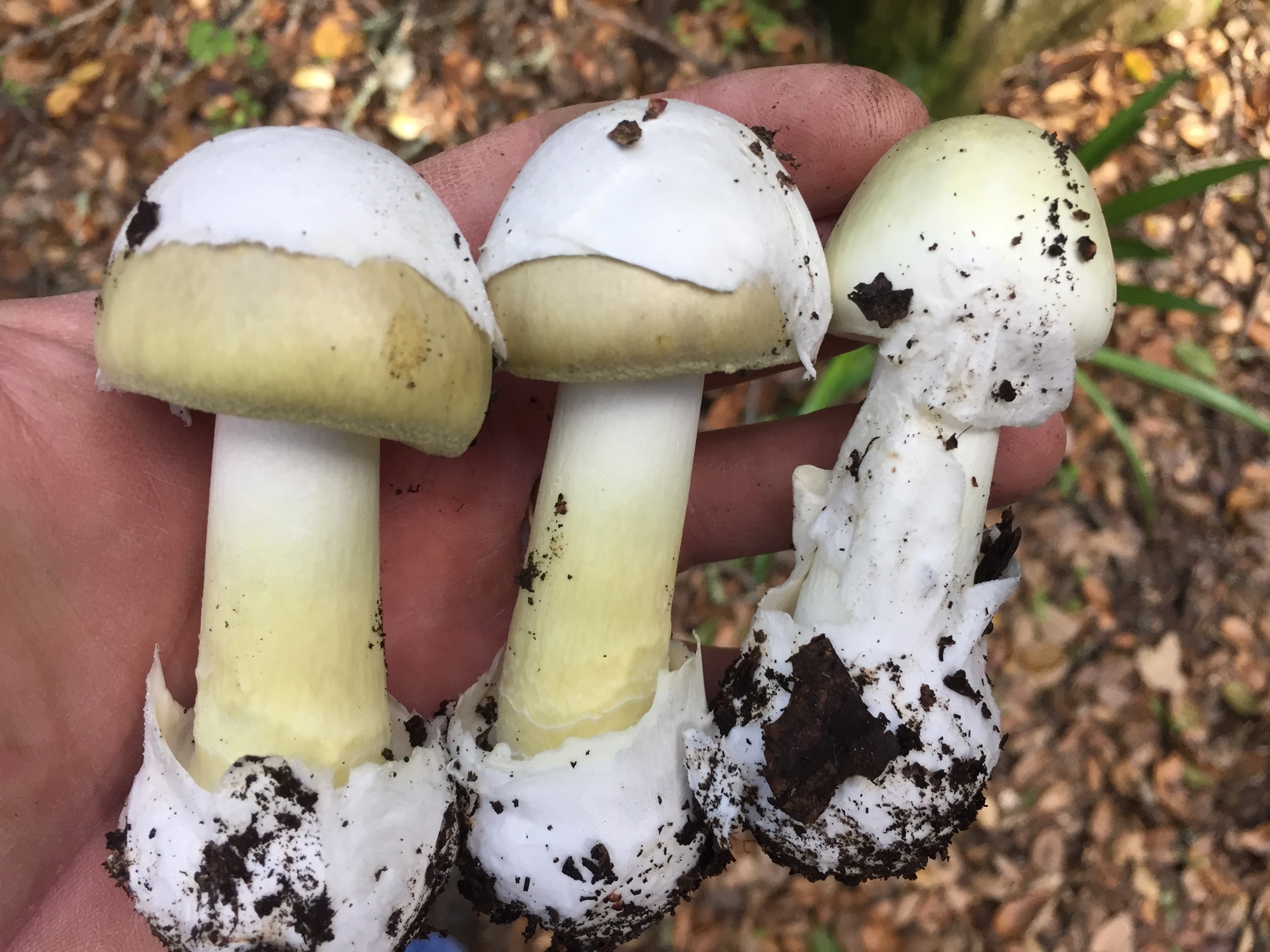
"The state has warned that cooking, boiling, drying, or freezing these mushrooms will not make them safe to eat, either. "When in doubt, throw it out," warned Reed, whose organization also has a toxicology committee. As a rule, he urged foragers at any time to never consume a mushroom they aren't 100% sure is safe - meaning, if you're reading this article to try to decide if you should eat a mushroom that might be a death cap, don't."
"Amanita phalloides is an invasive species from Europe arriving in California around the 1930s, which has since spread rapidly up and down both the East and West Coasts, mostly near urban areas, but not yet deep or widespread in forests, Bunyard said. "They're just inherently around places where people are," Bunyard said - making their proximity to humans even more dangerous. "The only rule of thumb is that you really have to know exactly what the mushroom is that you're eating before eating it," he said. "Otherwise, you could get in trouble.""
California health officials report 21 hospitalizations and one death from the toxic death cap mushroom, Amanita phalloides, and urge people to avoid foraging and eating wild mushrooms this season. The death cap resembles several edible species and tastes normal, making misidentification common and dangerous. Cooking, boiling, drying, or freezing do not neutralize its toxins. The species is an invasive European fungus that arrived in California in the 1930s and has spread near urban areas across both coasts. Foragers should never consume any mushroom they are not 100% certain is safe and should discard suspect specimens.
Read at Kqed
Unable to calculate read time
Collection
[
|
...
]