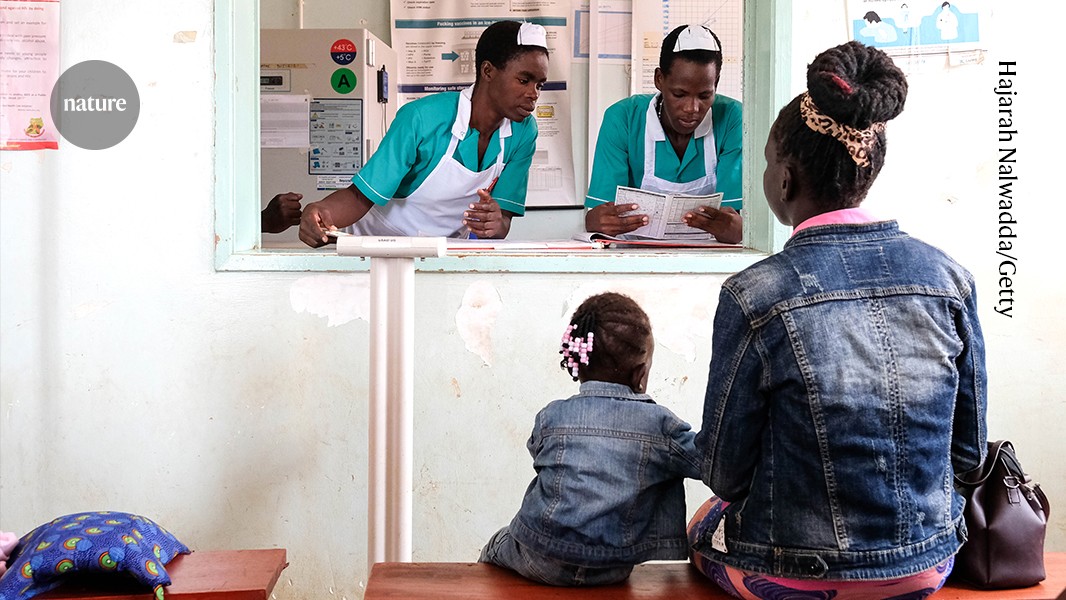
"There is little doubt that this is what African countries need if they are serious about universal health coverage - ensuring that every member of their populations has access to this fundamental human right. But such an approach has never been implemented in Africa. Some of the reasons for this are outlined in a report on health financing by the Africa Centres for Disease Control and Prevention (Africa CDC), the continent's public-health agency based in Addis Ababa, published last week (see go.nature.com/3o9wxfc)."
"But if ever there was a time to put the idea into practice, this is it. Africa faces a seismic challenge: finding a way to protect public health when financial assistance for health care from Europe and the United States has halved. In 2021, it amounted to US$26 billion; last year, the figure was $13 billion. What might happen going forwards remains unclear. Initial estimates suggest that the cuts will increase the death toll from preventable diseases such as malaria, HIV/AIDS and tuberculosis by millions."
"The one plan, one budget, one report (OPBR) approach is not new. In this instance, it encapsulates the idea that African countries must be able to control their nations' health-care policies. It means forging a single plan, to be owned and funded by the nations themselves. It means building capacity from the ground up, with more emphasis on nations' needs, less on the (often competing) priorities of donors, and with centralized accountability for delivery."
Massive cuts to global health-care funding have halved financial assistance from Europe and the United States, dropping from US$26 billion in 2021 to $13 billion last year. Projections indicate the reductions could increase deaths from preventable diseases like malaria, HIV/AIDS and tuberculosis by millions. The One Plan, One Budget, One Report (OPBR) approach calls for national control of health policies, a single, nation-owned and funded plan, centralized accountability, and capacity building that prioritizes national needs over donor priorities. Prioritizing immunization policy is essential given the high burden of preventable infectious diseases.
Read at Nature
Unable to calculate read time
Collection
[
|
...
]