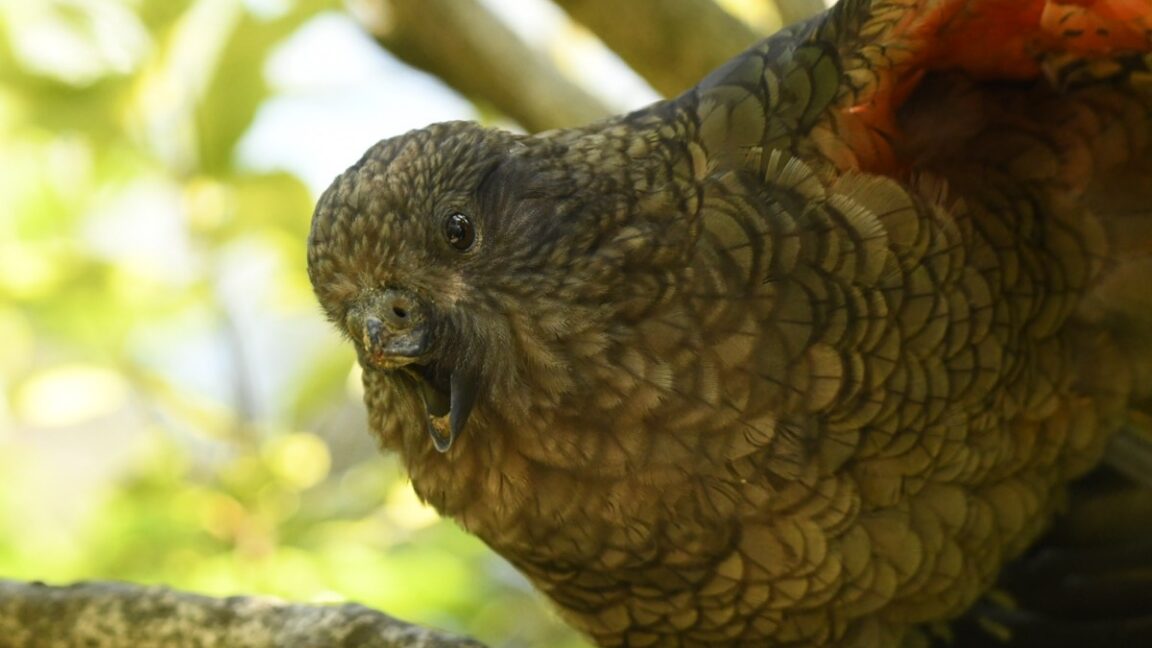
"Bruce shows us that behavioral innovation can help bypass physical disability, at least in species with the cognitive flexibility to develop new solutions. Previous research has shown links between large brains, behavioral flexibility, and survival at the species level."
"Bruce demonstrates how those links play out in a single individual, on traits that matter day-to-day, like social dominance. Our findings also raise an important welfare question: if a disabled animal can innovate its way to success, well-intentioned interventions like prosthetics might not always improve their quality of life."
Bruce, a kea, utilized a unique beak-jousting technique to displace rivals and achieve alpha status. He engaged in forward thrusts targeting various body parts, contrasting with other males who bit downward. Unlike two other documented cases of disabled animals relying on alliances, Bruce's success stemmed from his own dominance. Behavioral innovation allowed him to overcome physical limitations, suggesting that interventions like prosthetics may not always enhance the quality of life for disabled animals, as they can sometimes thrive independently.
Read at Ars Technica
Unable to calculate read time
Collection
[
|
...
]